

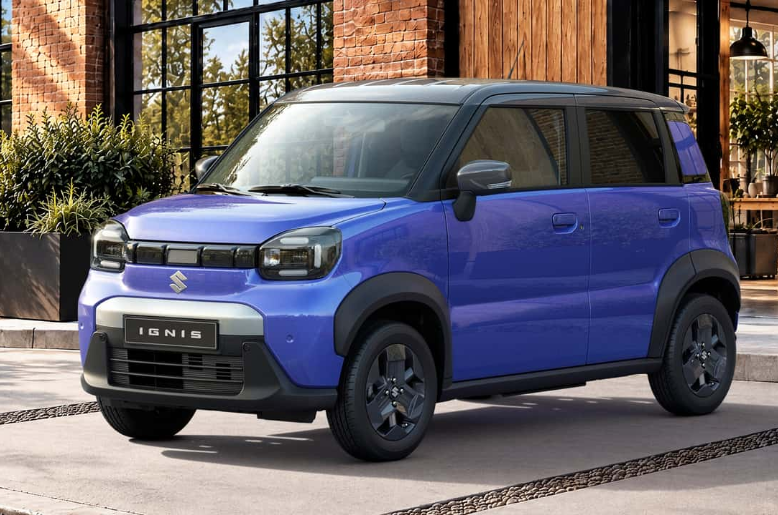
Small cars are coming back, and the Suzuki Ignis leads the way. The name returns to Europe in summer 2027. This time, it is fully electric.
The old Ignis was a chunky petrol hatchback. The new Suzuki Ignis is a compact EV built for cheap, honest city transport. It skips the bulk of modern crossovers and gives you only what you need.
Before you put down a deposit, you should know what you are getting. Here are the seven things that matter most.
1. Size and Dimensions: Small Car, Smart Choice
The Suzuki Ignis gives you a car that fits where others cannot. It measures:
- Length: 3,570 mm
- Width: 1,565 mm
- Height: 1,635 mm
- Wheelbase: 2,460 mm
- Weight: 1,080 kg
This car comes from the Suzuki e-Sky, a Kei car sold in Japan. Kei rules cap length at 3,400 mm. Europe needs more crash space and cabin room, so Suzuki made the car 175 mm longer and 90 mm wider.
The weight is the real headline. At 1,080 kg, the Suzuki Ignis is the lightest full-size electric car on sale. It beats the Honda Super-N by 17 kg. The Dacia Spring Mk2 weighs over 1,212 kg.
Our take: Low weight brings benefits you will feel every day. Tires wear more slowly. Brakes last longer. The battery works less to move the car, so you get more distance from each charge. A lightweight EV saves you money long after you drive it home.
Parking spaces in Europe have not grown since the 1970s. Cars have. The Ignis fixes that mismatch and makes every supermarket trip easier.
2. Electric Powertrain: Modest Numbers, Real Pep
The Suzuki Ignis uses a 26 kWh lithium iron phosphate (LFP) battery. It powers a single front motor. You get 91 hp and 133 Nm of torque.
Those numbers look small on paper. But context matters. The Renault Twingo makes only 80 hp and weighs about 150 kg more.
Our take: Power to weight is what you feel from behind the wheel. The Ignis has roughly 84 hp per tonne. That gives you quick, confident starts at traffic lights and roundabouts. You will not win races, but you will slip into gaps with ease.
The LFP battery also deserves attention. LFP cells handle many charge cycles well. Many makers say you can charge LFP batteries to 100% on a regular basis with less worry than other types. That means more usable day-to-day range and a battery built to last for years.
3. Real-World Range: Plan for About 206 km
Suzuki has not shared an official European range yet. The Japanese e-Sky claims 310 km, but that figure uses the softer Japanese WLTC test. The European WLTP test is much stricter.
Expect the Suzuki Ignis to land near the Honda Super-N’s 206 km WLTP rating.
Our take: For most city drivers, 206 km is plenty. If you drive 30 km a day, you can go nearly a full week between charges. Here is a simple way to think about it:
- Daily commute of 20 to 40 km: Charge once or twice a week
- School runs and errands: One charge covers several days
- Long motorway trips: Not the right car for this job
Cold weather can cut EV range by 20% to 30%. In winter, plan for about 150 km. That still covers most city routines with room to spare.
The efficiency is impressive too. 206 km from 26 kWh works out to about 12.6 kWh per 100 km. That makes the Ignis one of the most efficient electric city cars you can buy.
Pakistan’s automotive market is also seeing growing interest in electric mobility and affordable transportation options. Read more about Millat Tractors’ plan to launch electric scooters and discover what this development could mean for local buyers.
4. Charging Speed: Small Battery, Short Stops
The Suzuki Ignis supports:
- AC home charging: Up to 7.4 kW
- DC fast charging: Up to 50 kW
- 10% to 80% on DC: Under 30 minutes
50 kW sounds slow next to premium EVs that pull 250 kW. But those cars have batteries three or four times larger. A small battery fills quickly, even on a modest charger.
Our take: Home charging is where the Ignis shines. On a 7.4 kW wallbox, you can fill the battery from nearly empty in about four hours. Plug in after dinner, and you wake up to a full car.
Running costs stay low too. At a home rate of €0.30 per kWh, a full charge costs about €8. That buys you roughly 200 km of driving. A petrol car would need far more money to cover the same distance.
Fast charging at 50 kW also has a hidden bonus. Older, cheaper 50 kW chargers are common and often less busy. You may wait less than drivers of bigger EVs.
5. Price Against Rivals: The Make or Break Factor
Suzuki has not announced a price yet. This is the biggest unknown, and it will decide the car’s fate.
Here is how key rivals compare:
| Model | Length | Price |
|---|---|---|
| Honda Super-N | 3,599 mm | €22,274 |
| Renault Twingo | Not stated | €17,290 |
| Suzuki Ignis | 3,570 mm | To be confirmed |
Our take: Suzuki has almost no room for error. If the Ignis costs as much as the Honda, buyers will walk away. If it matches or beats the Twingo, it becomes a very strong affordable electric vehicle.
Suzuki has a smart cost advantage. It did not build this car from scratch. It took an existing Japanese model, made it wider, and shipped it to Europe. That approach saves billions in development costs. Those savings could reach your wallet.
Our advice is simple. Wait for official pricing and check local EV grants before you commit. A price under €17,000 makes the Ignis a clear winner in its class.
6. Cabin Simplicity: Built to Last, Not to Impress
Inside, the Suzuki Ignis keeps things clean and practical. You get:
- Cup holders where you need them
- Slim touch controls for climate
- A simple scroller for volume
- A drive selector mounted high on the dashboard
The high selector frees up space between the front seats. There is no giant touchscreen trying to act like a cinema.
Four adults can fit for short trips. Taller passengers will feel tight in the back on longer drives.
Our take: Fewer screens mean fewer things to break. Simple cabins also age better. A basic layout still feels fine after eight years, while flashy tech often looks dated in three. If you want a car that just works, this cabin delivers.
Outside, the design matches this tough attitude. Unpainted plastic covers the wheel arches and lower sides. These panels shrug off small scrapes from tight parking. Square LED daytime lights and a black grille finish the boxy look.
7. Urban Maneuverability: The Ignis Superpower
The Suzuki Ignis has a turning circle of just 9.0 m. That lets you make U-turns where most hatchbacks need a three-point turn.
The old petrol Ignis won fans because it was so easy to park. Suzuki kept that strength.
Our take: This number matters more than horsepower for city drivers. Narrow streets, tight car parks, and crowded old towns become easy. Picture the narrow lanes of Florence or a packed residential street in a busy city. A 9.0 m turning circle turns stress into simple, quick moves.
For urban driving, small size plus sharp steering beats raw speed every time.
Why Suzuki Knows Small Cars
Suzuki has built budget small cars since the Suzulight in 1955. The brand has sold over 90 million vehicles since then. That experience shows. Suzuki knows what budget buyers want and what they will not accept.
Who Should Buy the Suzuki Ignis?
The Ignis suits you if you:
- Drive mostly in towns and cities
- Can charge at home or work
- Want low running costs
- Need a car that parks anywhere
Look elsewhere if you:
- Drive long motorway trips often
- Carry four adults on long journeys
- Want big screens and premium tech
Final Verdict
The Suzuki Ignis brings smart Kei car thinking to Europe. It is light, efficient, and built for real city life. The 206 km range covers daily needs. Charging is quick and cheap. The 9.0 m turning circle makes parking easy.
Price is the final piece. If Suzuki gets it right, the Ignis could become the best electric city car of 2027. Keep an eye on the launch, and compare offers before you buy.