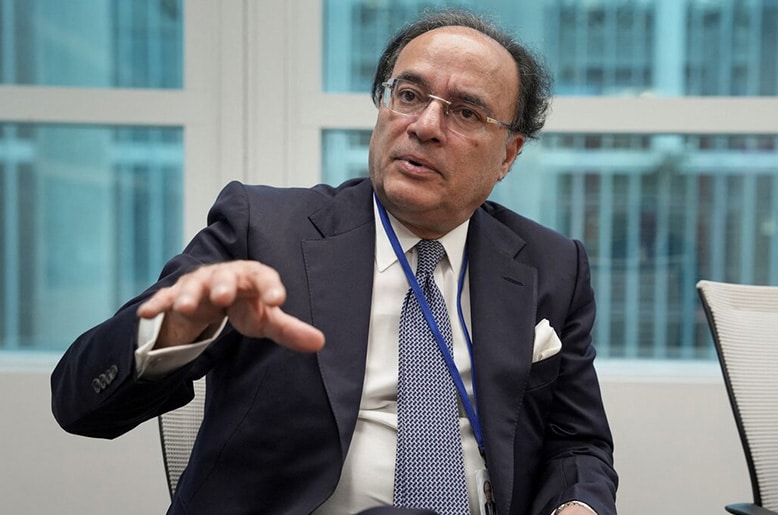
Pakistan is shifting its economic focus from restoring stability to building a growth model based on investment, exports, productivity and private sector activity, Finance Minister Muhammad Aurangzeb said on Friday.
Speaking at a fireside chat titled “Pakistan: External Shocks Remain Manageable” at the J.P. Morgan Emerging and Frontier Markets Opportunities Conference in London, Aurangzeb said the country had made progress in rebuilding economic stability and investor confidence.
The conference attracted strong interest from international investors, with 55 global investment funds holding one-on-one meetings with the Pakistani delegation and joining an investor session.
Aurangzeb outlined six government priorities: maintaining macroeconomic stability, promoting productivity and exports, continuing structural reforms, moving from aid towards trade and investment, improving access to finance and preparing Pakistan for the digital economy, including blockchain and Web 3.0.
He said restoring stability and rebuilding economic credibility had been the government’s main task over the past three years. Pakistan’s economy grew 3.7% in fiscal year 2025-26, while the fiscal deficit fell to 2.6% of GDP. The country also recorded a primary surplus for the third consecutive year.
The finance minister said the next phase would focus on making these gains lasting and moving away from consumption-led growth towards investment, exports, productivity and private sector activity.
He also highlighted efforts to improve the government’s debt position by extending domestic debt maturities and reducing refinancing risks. These steps, along with fiscal consolidation, were helping strengthen the country’s overall financial position.
Pakistan has also regained access to international capital markets, Aurangzeb said, pointing to its first Panda Bond and a subsequent $3 billion dual-tranche Eurobond. Both attracted strong investor demand.
On privatisation, he said the government was working to redefine the role of the state, with progress involving PIA, power distribution companies, financial institutions, other state-owned enterprises and airports.
Aurangzeb said greater access to finance for SMEs, agriculture and housing would be needed to support investment and productive activity. He stressed that public resources alone could not finance Pakistan’s next stage of growth.
State Bank Governor Jameel Ahmad said Pakistan’s external position had strengthened, citing improved foreign exchange reserves, higher remittances, stronger external sector fundamentals and growing Roshan Digital Account flows.
He said lower inflation and financial sector reforms had also helped strengthen macroeconomic stability and create better conditions for investment and sustainable growth.
Read next: Aurangzeb pushes transparent drug pricing to keep medicines affordable