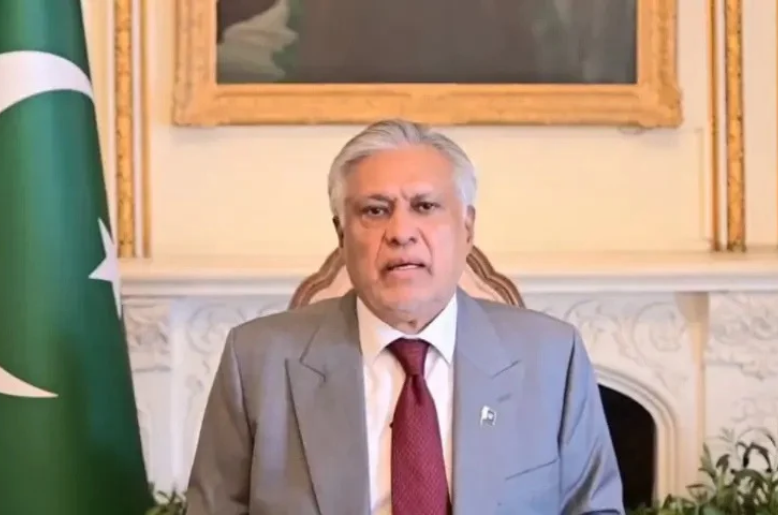
Deputy Prime Minister and Foreign Minister Ishaq Dar has reaffirmed Pakistan’s position on the Indus Waters Treaty. He warned that attempts to deny Pakistan its water share could affect regional peace and security. Dar made the remarks during the International Water Symposium in Austria. The Embassy of Pakistan organised the event with the Diplomatic Academy of Vienna. In his video address, Dar stressed Pakistan’s resolve to protect its rights. He said Pakistan would defend its interests under the treaty and international law. The ishaq dar indus waters treaty issue remains important in Pakistan-India relations. Water sharing has become a major point of disagreement between both countries.
Dar said that water security closely affects Pakistan’s food security.The Indus River System supports agriculture, energy production and economic activity. He also highlighted the importance of water for millions of people. He said disputes over shared rivers can affect relations between neighbouring states.
Pakistan Maintains Treaty Remains Important
Pakistan and India signed the Indus Waters Treaty in 1960. The agreement followed years of negotiations between the two countries. The treaty divides the use of six rivers between Pakistan and India. The eastern rivers include the Ravi, Beas and Sutlej. The western rivers include the Indus, Jhelum and Chenab. The agreement largely allocates these rivers to Pakistan. The treaty also provides mechanisms for data sharing and dispute resolution. Dar said these mechanisms should remain central to resolving disagreements.
India announced that it was placing the treaty in abeyance in April 2025. Pakistan rejected the move and maintained that the treaty does not allow unilateral suspension. Dar also referred to a recent Permanent Court of Arbitration decision. The court stated that the treaty remains in force. According to Dar, the decision reinforced Pakistan’s position. He said neither side can remove treaty obligations through unilateral action. India has rejected the court’s position. Its government has said it does not recognise the decision.
Dar Calls for Dialogue and Legal Mechanisms
The ishaq dar indus waters treaty debate also includes Pakistan’s approach to resolving disputes. Dar said Pakistan has continued to support dialogue and diplomacy. He also pointed to dispute resolution procedures under the treaty. Pakistan is participating in Neutral Expert proceedings linked to the water agreement. Dar said these processes show Pakistan’s support for institutional solutions. He called for stronger technical engagement between the two countries. He also highlighted transparency and regular data sharing. Dar said cooperation over shared waters is important for regional stability. He warned that water disputes could create wider consequences beyond Pakistan and India.
He also raised concerns about the wider impact on international water agreements. He said weakening such agreements could affect other countries sharing transboundary rivers. Dar said Pakistan prefers cooperation over confrontation. He also called for respect for international law and existing treaty obligations. The ishaq dar indus waters treaty issue is therefore expected to remain part of regional diplomatic discussions. Pakistan continues to call for the treaty’s implementation and peaceful dispute resolution.
Ishaq Dar also urges the US and Iran to resolve differences through diplomacy and dialogue.