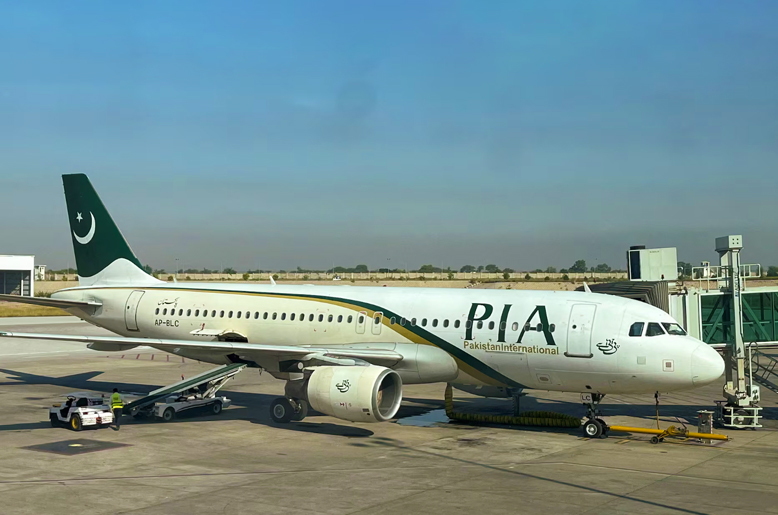
Pakistan International Airlines (PIA) on Friday announced a temporary suspension of its flights to Riyadh, Saudi Arabia, citing the prevailing situation in the Middle East, a spokesperson said.
The airline advised passengers to contact the PIA call centre for the latest updates on their flight schedules and operational status.
The announcement comes amid escalating hostilities between Saudi forces and Yemen’s Houthi fighters.
On Wednesday, three people were killed in attacks on two international airports in Saudi Arabia, including one in the capital, Riyadh, after Yemen’s Houthis claimed responsibility for targeting both transport hubs.
A Pakistani national, five Saudi citizens and two Egyptian nationals were injured in the attack on King Khalid International Airport.
Riyadh airport came under attack again on Thursday, causing catastrophic damage to an aircraft.
Following the outbreak of the US-Iran war, PIA suspended flights to several Gulf countries, including the United Arab Emirates, Bahrain, Qatar and Kuwait, on March 1. At the time, the airline had said it would continue operating flights to Saudi Arabia.
Earlier, Prime Minister Shehbaz Sharif held a telephone conversation with Saudi Crown Prince Mohammed bin Salman, condemning the Houthi militia’s attacks on Saudi oil tankers in the Red Sea.
The PM took to X, saying “I condemned, in the strongest possible terms, the Houthi militia’s attacks against Saudi oil tankers in the Red Sea. Such actions are unacceptable, violate international law, threaten freedom of navigation, and undermine regional peace and security.”
The PM said, “I reaffirmed Pakistan’s complete solidarity with the brotherly Kingdom of Saudi Arabia and conveyed that I, together with Field Marshal Syed Asim Munir and the entire Pakistani nation, stand firmly and resolutely with the Saudi leadership and the brotherly people of the Kingdom at this critical time.”
“His Royal Highness Crown Prince Mohammed bin Salman and I agreed to continue working very closely to maintain regional peace, security, stability, and the uninterrupted flow of lawful maritime commerce through the Red Sea as well as the Strait of Hormuz and the wider region,” he added.