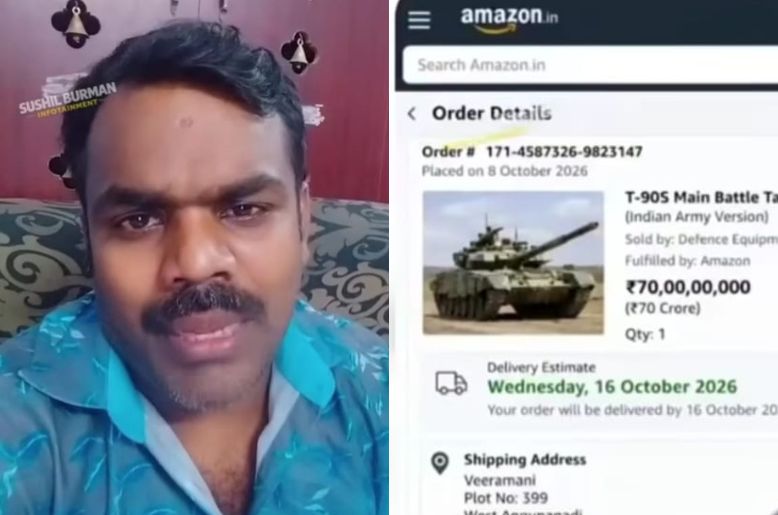
A Tamil Nadu-based Indian influencer was targeted in an online prank involving a 70 crore Indian rupees (IDR) tank order placed on Cash on Delivery (COD).
A military tank reportedly worth 700 million Indian rupees (Rs2.4bn) became part of an online prank targeting an Indian social media influencer after he shared his home address in the hope of receiving Diwali sweets.
But the tank was not confirmed to have been delivered. Instead, screenshots claiming that a 700m IDR T-90 military tank had been ordered on a cash-on-delivery (COD) basis circulated online as part of a wider harassment campaign against Veeramani, an influencer based in Madurai, in the southern Indian state of Tamil Nadu.
Veeramani had shared his phone number and residential address on social media, asking followers to send him sweets ahead of Diwali, the Hindu festival of lights.
Instead, his details were reportedly used to place a stream of unwanted COD orders in his name.
Delivery workers from online retailers arrived at his home with household appliances and electronic goods, including refrigerators, washing machines, smartphones and televisions. One television was reportedly priced at 169,000 IDR.
Under the COD system, customers are expected to pay when an item is delivered. Veeramani said he had not ordered the goods and could not afford to pay for items he had never requested.
The pranksters also circulated claims about orders for heavy machinery, including JCB excavators, as well as the alleged military tank. Reports have not independently verified the tank claim as a genuine order or delivery.
As the deliveries continued, Veeramani posted videos appealing to people to stop placing orders in his name.
He expressed concern that delivery workers were travelling to his home unnecessarily and becoming caught up in the prank.
The harassment reportedly extended beyond shopping orders. His phone number was allegedly circulated in connection with kidney donation enquiries, adding to the unwanted calls he was receiving.
The situation became so difficult that Veeramani reportedly left his home after repeated deliveries and confrontations. Neighbours told local media that the house had been locked.
The incident highlights how publicly sharing a home address and phone number can expose people to harassment and the misuse of their personal information.
Fake COD orders can also waste delivery workers’ time and create difficulties for retailers and couriers, even when the person named in an order has done nothing wrong.
What began as a request for a festive treat has therefore turned into a wider online harassment incident, with the extraordinary claim of a 700m IDR tank helping the story spread, despite no confirmation that such a delivery ever took place.
