
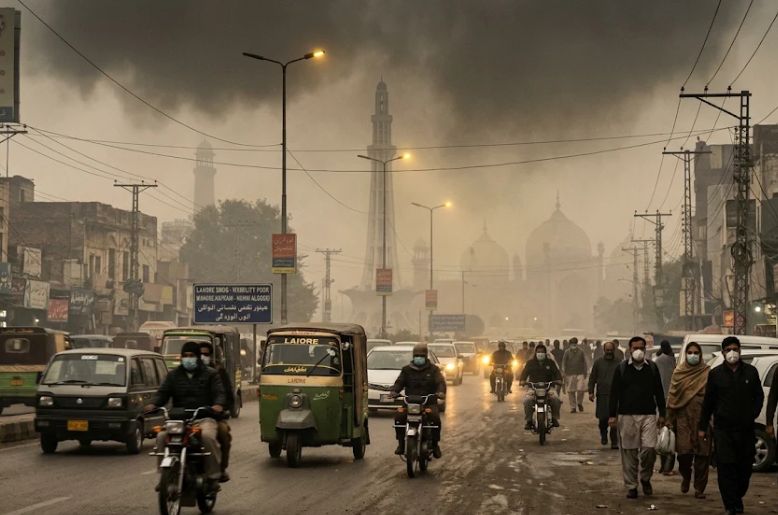
Lahore’s air pollution crisis has intensified, with the city’s Air Quality Index (AQI) climbing above 600, placing it among the world’s most polluted major cities and raising fresh concerns about the health risks faced by residents.
The alarming pollution levels have pushed Lahore to the top of global rankings for poor air quality, highlighting the worsening smog situation as residents continue to breathe heavily polluted air.
An AQI reading above 600 indicates hazardous conditions, with exposure posing serious health risks to people across the city.
Air pollution at such levels can cause respiratory difficulties, throat irritation, coughing and eye discomfort.
Prolonged exposure may also worsen existing conditions, particularly asthma and other heart and lung diseases. Children, older people and individuals with respiratory illnesses are especially vulnerable.
Vehicle emissions, industrial pollution, construction dust and the burning of crop residue are among the factors commonly associated with deteriorating air quality in Lahore and surrounding areas.
Health experts generally advise residents to limit outdoor activities when pollution levels reach hazardous ranges. People are also encouraged to wear well-fitted protective masks when going outside, keep windows closed during periods of severe pollution and avoid strenuous outdoor exercise.
Will rain bring relief from Lahore’s smog?
There may be some relief in sight as the Pakistan Meteorological Department (PMD) has forecast rain and thunderstorms in Lahore on November 12 and 13 under an approaching westerly weather system.
The forecast includes possible gusty winds and isolated hailstorms in parts of Punjab.
Rainfall could temporarily improve air quality by washing some pollutants and suspended particles out of the atmosphere.
However, it is unlikely to eliminate the smog completely, particularly if pollution emissions continue and weather conditions remain unfavourable.
According to the forecast, Lahore could experience a brief improvement in air quality following the expected showers, although fog and smog may persist during morning hours.
The latest developments underline the need for stronger measures to control pollution sources, including industrial emissions, vehicle exhaust and crop-residue burning.
Without sustained action, Lahore is likely to remain vulnerable to recurring episodes of hazardous air pollution.
Air pollution has become a serious threat to public health in the city, prompting authorities to advise motorcyclists and pedestrians to wear masks.
Smog and air pollution have engulfed Lahore, with the Air Quality Index (AQI) in various parts of the city approaching 500, making the air extremely hazardous to health.
According to details, smog and severe air pollution have taken hold of Lahore, leaving the city’s air quality extremely hazardous and posing serious risks to citizens’ health.
The Environment Department and monitoring sources reported that the Air Quality Index (AQI) in various parts of the city was recorded between 450 and 500, falling within the dangerous category. Air pollution levels at several key locations, including Garhi Shahu, Gulberg and Canal Road, are being continuously monitored.
Due to the high concentration of polluted particles in the air, complaints of eye irritation, coughing and throat problems are rapidly increasing among citizens, while patients suffering from respiratory illnesses and asthma are facing severe difficulties.
Health experts have advised children, elderly people and individuals suffering from respiratory diseases to take special precautions. They have recommended that citizens avoid leaving their homes unnecessarily.
Furthermore, motorcyclists and pedestrians have been urged to wear masks, while drivers have also been advised to remain cautious while travelling due to the risk of reduced visibility caused by smog.