
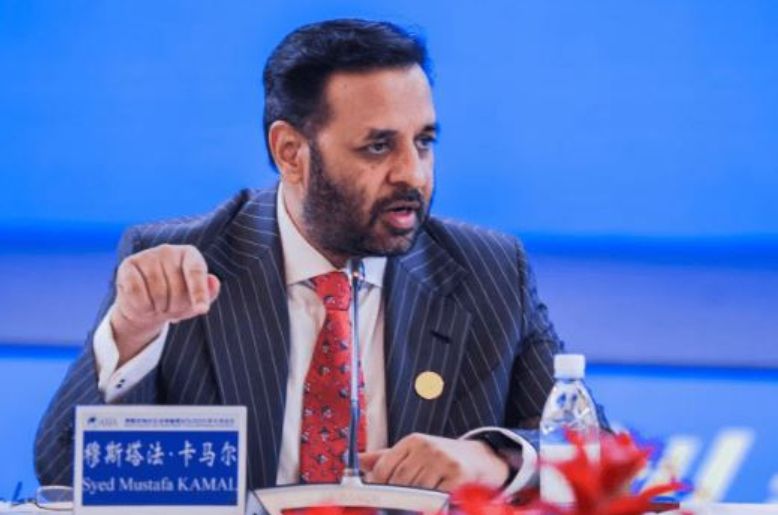
Federal Health Minister Mustafa Kamal has urged Pakistan People’s Party (PPP) Chairman Bilawal Bhutto Zardari that if any blood flows in Sindh during the debate of creating new provinces, then he would be held answerable.
Speaking at the National Press Club in Islamabad, Kamal criticised Bilawal’s recent statement regarding the possibility of bloodshed in the city of Hyderabad, Mirpurkhas and Sukkur, which have a large population of Muhajirs.
He claimed that the Muhajir community had suffered from violence and discrimination in the country over the past 18 years, and that after the assassination of former prime minister Benazir Bhutto, there had been widespread arson in Karachi.
The formation of new provinces should be one for the people, not the political agenda, the minister said. He said that the prime minister could conduct a referendum on the matter.
Kamal also attacked the PPP government’s 18 years rule in Sindh, stating that the city of Karachi still has a lot of issues and children were dying after falling into open sewage drains and there was still a shortage of clean drinking water.
He said that the Muhajirs community of 38 per cent of the population of Sindh was not getting fair distribution of developmental resources. He also requested fair allocation of financial resources in provinces and capable institutions of local governments.
Delaying demands for new provinces could provide space for “bad elements” to meddle, Kamal warned against it.
The health minister separately announced a nationwide programme worth Rs70 billion that will make Pakistan hepatitis-free by providing free screening and treatment services.
The government had initially budgeted Rs. 1 billion for the project and the screening has started in Islamabad where 150,000 people had already been screened.
Kamal says that there are about 11 million patients with hepatitis in Pakistan. With early diagnosis, treatment for three months could help the patients recover, he added.