
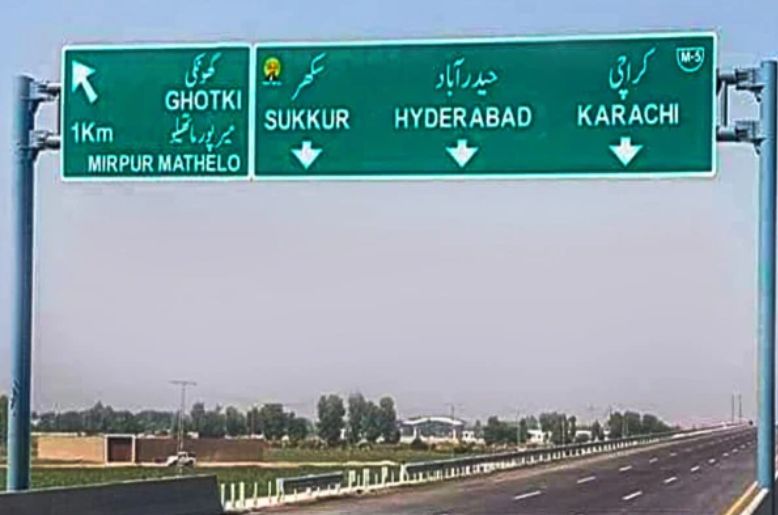
The Public-Private Partnership Authority (P3A) Board has approved the construction of two sections of the Hyderabad-Sukkur Motorway (M-6), covering approximately 121 kilometres, under a public-private partnership (PPP) model.
According to media reports, the decision marks a major milestone towards completing Pakistan’s north-south motorway corridor and attracting private investment in strategic infrastructure projects. The approval was granted during the 46th meeting of the P3A Board, chaired by Muhammad Ali, Advisor to the Prime Minister on Privatisation and Chairman of the Privatisation Commission.
Under the approved plan, Sections 1 and 2 of the M-6 Motorway will be developed and operated under separate concession agreements. Private investors will be responsible for constructing and operating the two sections for 25 years, recovering their investments through toll revenues.
After the completion of the concession period, the motorway sections will be handed over to the National Highway Authority (NHA) in good condition.
The government will provide viability gap funding exclusively for Section 1 to ensure the project’s commercial viability and keep toll rates affordable for road users.
The Asian Development Bank (ADB) is serving as the transaction advisor to the NHA for both sections. The authority will invite bids from eligible local and international investors to undertake the projects.
M-6 Motorway to reduce Hyderabad-Sukkur travel time
The 306-kilometre M-6 Motorway will be a six-lane, access-controlled highway constructed in five sections. Once completed, it is expected to reduce travel time between Hyderabad and Sukkur from approximately six hours to three hours.
Currently, traffic between the two cities primarily uses the N-5 National Highway, where heavy freight vehicles share congested roads with local traffic passing through several cities and towns. The situation has raised long-standing concerns about road safety and transportation efficiency.
According to the ministry, the remaining three sections, extending from Nawabshah to Sukkur, will be financed through sovereign loans from the OPEC Fund and the Islamic Development Bank. Their procurement process is currently underway.
Private investors to manage motorway for 25 years
Under the PPP framework, private investors will finance, construct and operate the approved sections, while the government will retain regulatory oversight and receive a share of the project’s revenue.
The private operators will also be responsible for repairs and maintenance throughout the 25-year concession period.
The government believes the model will help deliver modern infrastructure without requiring the full project cost to be paid upfront from public funds.
Speaking after the meeting, Muhammad Ali said the M-6 Motorway was more than just a road, describing it as a vital missing link in Pakistan’s motorway network.
He said the government aimed to combine public-sector oversight with private-sector investment and expertise, while ensuring transparent procurement and attracting credible investors.
The prime minister’s adviser added that the motorway would improve the transportation of goods between Karachi’s ports, industrial centres, agricultural regions and markets in northern Pakistan.
He said the project would help reduce logistics costs, improve trade connectivity and create new business opportunities across interior Sindh.