
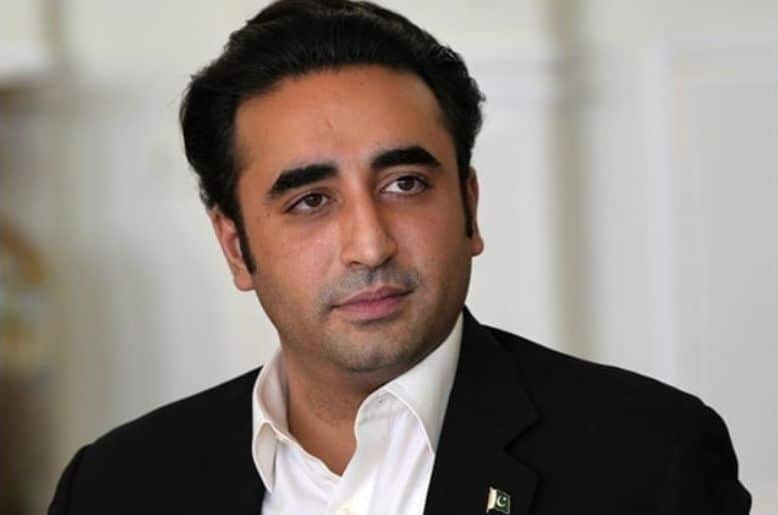
The Pakistan Peoples Party (PPP), led by Bilawal Bhutto Zardari, is facing renewed criticism over its nearly 18 years of uninterrupted rule in Sindh, as concerns mount over literacy rates, Karachi’s poor global liveability ranking, delayed Safe City projects, education, healthcare and deteriorating public infrastructure.
During a heated exchange with senior journalist Shahzeb Khanzada, Bilawal faced tough questions about the PPP’s governance record, with figures highlighting persistent challenges in Sindh despite nearly two decades of political continuity.
According to figures cited by critics, Sindh’s literacy rate stood at 59 per cent when the PPP returned to provincial power in 2008, compared with a reported 58 per cent in the latest period. However, the historical comparison requires verification, as official figures use different survey periods and methodologies.
The discussion also highlighted Karachi’s position at 170th among 173 cities in the Economist Intelligence Unit’s Global Liveability Index, with only Dhaka, Tripoli and Damascus ranking lower.
Khanzada questioned why Karachi had continued to struggle with public safety despite repeated promises to establish a comprehensive Safe City system over the past 15 years. Critics contrasted the delays in Sindh with the implementation of surveillance and security projects in Punjab and Khyber Pakhtunkhwa.
Education emerged as another major point of criticism. Figures cited during the debate suggested that 44 percent of children in Sindh were out of school, compared with 34 percent in Khyber Pakhtunkhwa and 27 percent in Punjab. These comparisons reflect figures presented in the criticism rather than a verified, same-year assessment.
Concerns were also raised about child stunting, poverty and inadequate healthcare facilities, with critics questioning why essential public services remain under pressure despite substantial provincial resources.
The PPP’s governance record has come under particular scrutiny because the 18th Constitutional Amendment granted provinces greater autonomy over education, healthcare and other important sectors. Sindh has also received financial allocations under the National Finance Commission Award, raising questions about how effectively these resources have been utilised.
Karachi’s worsening infrastructure, water shortages and dependence on private water tankers also featured prominently in the discussion. Khanzada questioned the provincial government’s inability to complete major development projects, including University Road.
Bilawal referred to the involvement of the Frontier Works Organisation (FWO) in the road project, prompting further questions about the performance of provincial and municipal authorities.
The exchange reportedly became tense when Bilawal challenged Khanzada’s questioning, while the journalist maintained that holding the PPP accountable for its governance record was a legitimate journalistic responsibility.
Khanzada also questioned the PPP’s political position on the federal government, its support for constitutional amendments and its changing stance towards Pakistan Tehreek-e-Insaf (PTI).
Critics argue that the PPP cannot distance itself from federal political decisions while continuing to support the ruling arrangement in Islamabad.
The PPP, meanwhile, has defended its record by pointing to infrastructure development, healthcare initiatives, social protection programmes and other investments across Sindh.