
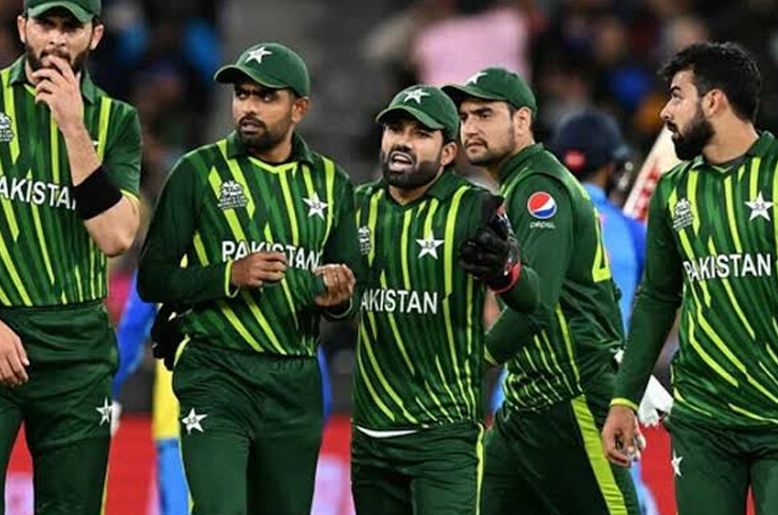
The changes in the Pakistan Cricket Board (PCB) and among players can be summed up as a transition from a player-centric to an institutional decision-making approach in Pakistan cricket.
Several national cricketers are said to have threatened to boycott the central contracts in 2023 unless they are paid a portion of ICC revenue. There were also a few players who didn’t like the idea of putting sponsors’ logos on their shirts or promoting during the World Cup.
The issue was settled through a meeting organised by Babar Azam, the former chief selector, and then PCB Management Committee chairman Zaka Ashraf.
After negotiations, the PCB accepted a 3 per cent levy on its ICC revenue for the benefit of the players, which would significantly boost their income.
At the time it was reported that senior players like Babar Azam and Mohammad Rizwan were being paid at least Rs4.5 million per month.
The picture is different in 2026 though. No big reports of any players challenging the board in relation to the new central contracts.
Some of the senior players have also expressed interest in the domestic competitions, which they used to ignore.
Current PCB chairman Mohsin Naqvi seems to have taken a tougher attitude on administrative matters, with the institution taking precedence over players. The board is also more dedicated to the development of new talent.
Well, experienced cricketers are crucial but Pakistan’s long-term agenda is to develop a system where there is performance-based selection instead of reputation-based selection.
There needs to be investment in the game of cricket like in other big cricketing nations.
National players should be paid fairly for their performance but the PCB needs to be responsible and fair when allocating resources throughout the broader cricketing framework.
In the end, Pakistan’s cricket should have a structure where there is no place for irreplaceable players, merit is given more importance than politics, and stability in cricket institutions comes before politics.