
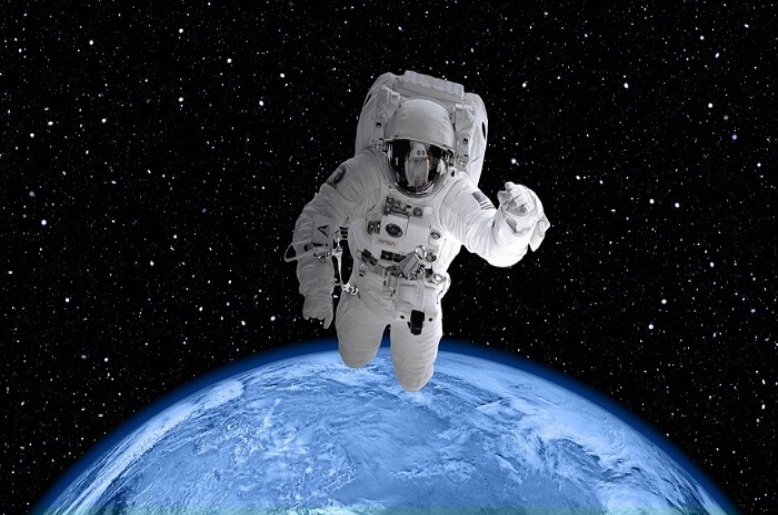
Pakistan’s space programme has set a future target with renewed determination. Chairman of the Space and Upper Atmosphere Research Commission (SUPARCO), Dr Yusuf Khan, has announced that Pakistan will attempt to set foot on the Moon in 2035. He said that the country’s space journey would not be limited to a single achievement but would continue in the future as well.
Addressing a gathering at SUPARCO headquarters in Islamabad, Dr Yusuf Khan said that today was a historic day for Pakistan. He said that over the past six months, SUPARCO had sent several satellites into space, however, the importance and nature of the current achievement were different.
4 selected out of 300 experiments
The SUPARCO chairman said that universities and educational institutions across the country had been contacted to collect scientific experiments for the space mission. As a result of this process, approximately 300 experiments were received.
Four of these experiments have been selected. According to Dr Yusuf Khan, the remaining experiments have also been preserved so that they can be utilised in the future.
How were the astronauts selected?
Dr Yusuf Khan said that the selection of astronauts was a difficult and sensitive stage. Along with the medical fitness of the candidates, their ability to withstand psychological pressure was also made a basic criterion.
In the initial stage, 50 candidates were assessed. Out of these, 19 candidates were sent to China for further selection.
Following the selection process conducted in China, Muhammad Zeeshan Ali and Khurram Dawood were selected. Through this selection, an important development has emerged in Pakistan’s space programme regarding human spaceflight.
Target of reaching the Moon
The SUPARCO chairman made it clear in his address that Pakistan’s space journey would not end with its current achievements. According to him, the country will continue working on space research and advanced scientific projects in the future as well.
He expressed hope that, God willing, Pakistan would set foot on the Moon in 2035. This announcement serves as a long-term target for the country’s space programme.