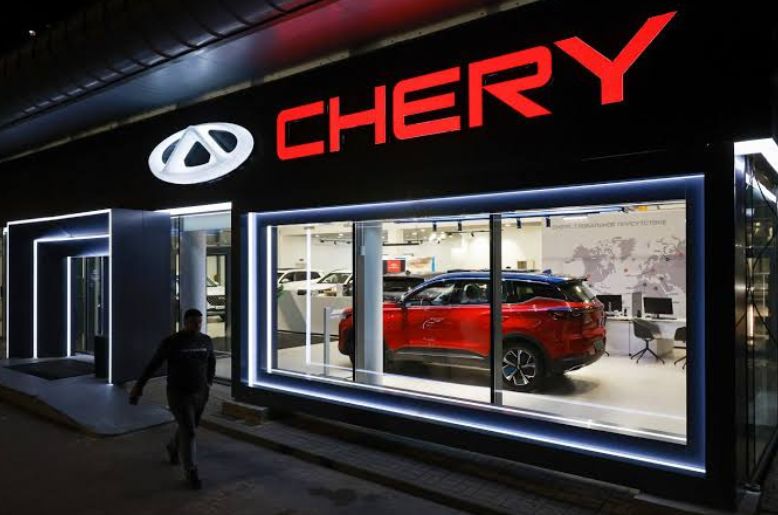
Chinese carmaker Chery has officially taken over Nissan’s vehicle manufacturing plant in Rosslyn, South Africa. The handover took place on Friday under an agreement that was announced in January.
The company said that it will spend millions of dollars to upgrade the factory and install new machinery before vehicle production begins in the middle of 2027.
Chery said that it wants to make South Africa its main centre for manufacturing, exports, research and development, and regional operations in Africa.
The company also confirmed that all 692 workers at the factory will keep their jobs. It said the project is expected to create nearly 3,000 direct and indirect jobs in manufacturing, supply chains, and related services.
Speaking at the handover ceremony, Chery Auto Vice President Charlie Zhang said the company plans to turn the Rosslyn plant into a full automotive centre with research, training, and supply chain operations. He added that Chery aims to sell more than 100,000 vehicles a year in South Africa.
Chery will first use the Rosslyn factory to build the Jetour T series, the Jaecoo J5, and the Chery Tiggo 4 SUVs. The Jaecoo J5 will be available with both petrol and new energy vehicle options.
Company officials said Chery will invest millions of dollars to improve the factory before production starts. During the first stage of production in the third and fourth quarters of 2027, the company expects to build around 15,000 vehicles.
Toyota, Suzuki, Honda car prices likely to drop
The federal government has reduced import taxes on completely built-up (CBU) vehicles under the 2026-27 budget. The decision is expected to reduce the prices of many imported vehicles in Pakistan.
Under the new tax policy, the government has lowered both the Regulatory Duty (RD) and the Additional Customs Duty (ACD) on imported vehicles.
The new rates will apply to cars imported from Japan, China, Thailand, Europe, the United States, and the Middle East.
According to official notifications, the Regulatory Duty on vehicles that was previously 50 per cent has been reduced to 20 percent. The 10 per cent Regulatory Duty has also been reduced to 8 per cent.