
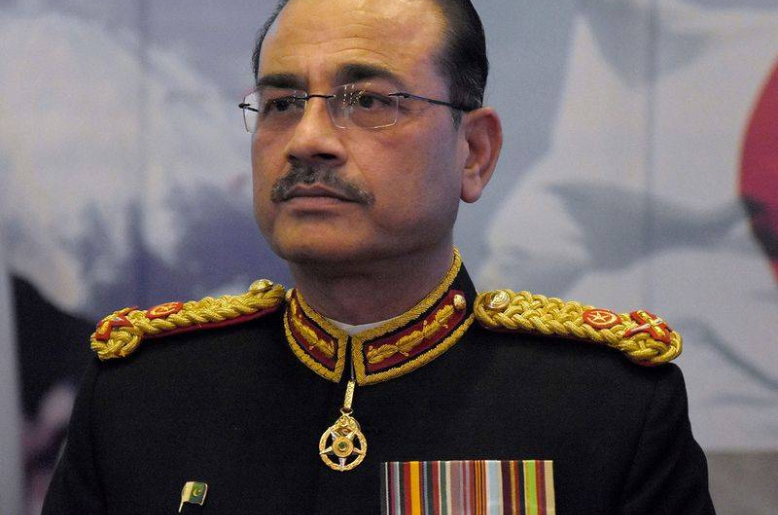
General Asim Munir is a major figure in Pakistan. As the country’s Chief of Army Staff, he holds one of the most powerful positions. His decisions can shape the future of the nation and affect its relationships with other countries, including the United States. Understanding his journey gives us a better look into the structure of Pakistan’s military and its role in the country’s politics.
This article provides a detailed look at the life of Asim Munir. We will cover his early life, family background, and the key steps in his long military career. You will learn about the training he received and the important jobs he held before becoming the army chief. This biography aims to give a clear and simple picture of the man leading one of the world’s largest armies.
Who is Asim Munir?
Asim Munir is a four-star general in the Pakistan Army. In November 2022, he became the 17th Chief of Army Staff (COAS). This position makes him the head of the entire Pakistan Army. He is known for his discipline, his religious devotion, and his extensive experience in both intelligence and command roles. His career shows a steady rise through the ranks of a very competitive military system.
Before reaching the top spot, General Munir led two of Pakistan’s most important intelligence agencies. He was the head of Military Intelligence (MI) and later the Inter-Services Intelligence (ISI). His time in these roles gave him deep knowledge of national and international security issues. People who have worked with him describe him as a professional and straightforward officer. His leadership style is seen as traditional, following the army’s established rules and values.
Early Life and Family Background
Asim Munir was born in Rawalpindi, a city with a large military presence in the Punjab province of Pakistan. He grew up in a middle-class family that valued education and religious principles. His father was a school principal, which likely instilled a strong sense of discipline and learning in him from a young age. This upbringing played a big role in shaping his character.
He is also a Hafiz-e-Quran, meaning he has memorized the entire Quran. In the Islamic faith, this achievement holds great significance and earns deep respect. He reportedly memorized the holy book while serving as a Lieutenant Colonel in Saudi Arabia. His deep religious commitment shapes his personal identity and guides his professional conduct. He is married and has children, though, like many high-ranking military officials, he keeps his family life very private.
Education and Military Training
Asim Munir’s military journey began at the Officers Training School (OTS) in Mangla. After completing his training, he was commissioned into the 23rd Battalion of the Frontier Force Regiment. This infantry regiment has a long and respected history in the Pakistan Army. His early years were spent gaining practical experience in various military units.
His education is not limited to just military tactics. General Munir is a graduate of the Command and Staff College in Quetta, a top institution for military officers in Pakistan. He also attended advanced courses abroad, including studies at the Fuji School in Japan and the Malaysian Armed Forces College in Kuala Lumpur. For his senior-level education, he attended the National Defence University in Islamabad, where he earned a Master of Philosophy (MPhil) degree in Public Policy and Strategic Security Management. This combination of local and international training gave him a broad perspective on military and strategic affairs.
A Look at Asim Munir’s Career Path
The career of Asim Munir shows a path marked by important command and staff appointments. He steadily climbed the military ladder, taking on jobs with increasing responsibility. His experience is diverse, covering command of troops, intelligence work, and strategic planning.
Early Command and Staff Roles
In his early career, Asim Munir served in various locations, including the northern areas of Pakistan near the border with Afghanistan. These postings gave him firsthand experience with the security challenges in that region. He commanded infantry brigades, which are large units of several thousand soldiers. This experience helped him develop his leadership skills on the ground.
One of his notable early postings was as a commander of forces in the Northern Areas. At that time, he worked under the current Chairman of the Joint Chiefs of Staff Committee, General Sahir Shamshad Mirza. This shows that he was part of the army’s leadership circle for many years. His performance in these roles earned him a reputation as a capable and reliable officer.
Leadership in Intelligence Agencies
Asim Munir’s career took a significant turn when he moved into the intelligence field. In 2017, he was appointed the Director General of Military Intelligence (MI). The MI is responsible for gathering information within the army and on domestic security threats. His leadership here put him at the center of Pakistan’s internal security operations.
Just over a year later, in October 2018, he was promoted to the head of the powerful Inter-Services Intelligence (ISI). The ISI is Pakistan’s main intelligence agency, dealing with foreign threats and strategic intelligence. His appointment was seen as a sign of trust from the army’s high command. However, his tenure as the ISI chief was the shortest in the agency’s history, lasting only about eight months. He was moved to a command position as the Corps Commander in Gujranwala. This move generated much discussion, but it did not stop his rise.
For recent updates on his leadership role, read how Field Marshal Asim Munir briefed President Zardari on the Afghanistan situation.
The Path to Army Chief
After his time as Gujranwala Corps Commander, Asim Munir was appointed as the Quartermaster General at the General Headquarters (GHQ). This is a senior administrative role responsible for managing the army’s supplies and logistics. It is a key position that oversees the vast operational needs of the military.
In November 2022, officials included his name on the list of senior generals sent to the Prime Minister for the selection of the next army chief. Although some questioned his eligibility due to his retirement date, the government chose him for the top position. Prime Minister Shehbaz Sharif selected him, and the President approved his appointment. Asim Munir assumed command of the Pakistan Army, becoming one of the country’s most influential figures. His journey highlights how the army values experience in command, intelligence, and administration for its top leadership.
Asim Munir as Chief of Army Staff
Since taking office, General Asim Munir has faced numerous challenges. Pakistan has been dealing with economic instability, political tensions, and a resurgence of security threats. His leadership is focused on maintaining the army’s professionalism and keeping it out of direct political involvement, a stated goal often tested by the country’s circumstances.
He has taken a strong stance on national security, particularly regarding terrorism. He has overseen military operations aimed at countering militant groups. On the economic front, he has supported government initiatives to stabilize the economy, showing the army’s role extends beyond just defense. His leadership will continue to be crucial in navigating Pakistan through its complex domestic and foreign policy challenges.
Frequently Asked Questions
1. What is Asim Munir’s current position?
Asim Munir is the current Chief of Army Staff (COAS) of the Pakistan Army, a position he has held since November 2022.
2. What is Asim Munir’s military background?
He is a four-star general from the Frontier Force Regiment and has served as the head of both Military Intelligence (MI) and the Inter-Services Intelligence (ISI).
3. Is Asim Munir a Hafiz-e-Quran?
Yes, he is a Hafiz-e-Quran, meaning he has memorized the entire Quran. This is a significant personal and religious achievement.
4. Where did Asim Munir receive his training?
He trained at the Officers Training School in Pakistan and also attended military colleges in Japan and Malaysia, as well as the National Defence University in Islamabad.
5. How long was Asim Munir the head of the ISI?
He served as the Director General of the ISI for about eight months, which is the shortest tenure in the history of the agency.


