
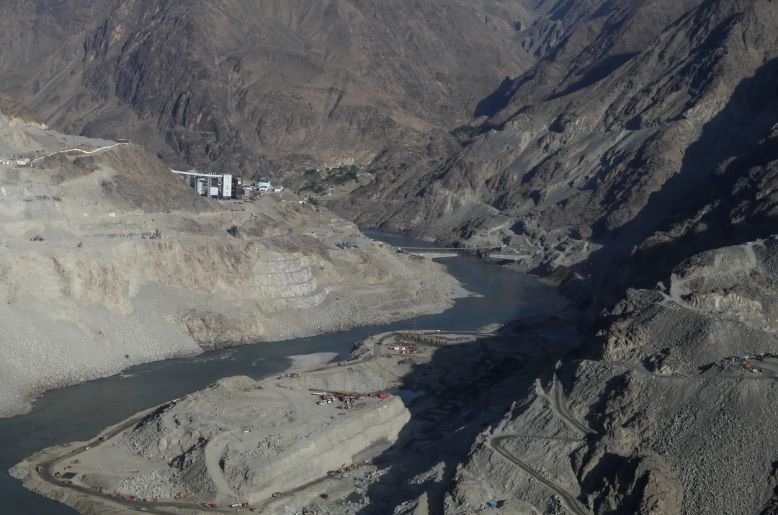
ISLAMABAD: Several Pakistani media outlets claimed that India has blocked water flows in the Chenab, Jhelum, and Neelum rivers today, Friday.
️The media outlets carried a completely false and misleading report about reduction of water flows into Pakistan via Rivers Jhelum, Neelum and Chenab as being at historically low levels
According to sources from the Indus Waters Commission, the reports regarding the water blockage at Chenab, Jhelum, and Neelum rivers are baseless.
Indus Water Commissioner Pakistan has completely rejected this report, confirming that the Commission has not even issued a warning in this case, which is one of their initial steps during seasonal inflow variation and the changes being observed are only seasonal inflow variations.
The officials stated that reports attributing drastic reductions in water inflows, such as drops to 3,000 cusecs in the Jhelum and Neelum, or from 10,000 to 5,000 cusecs in the Chenab, lack verification and appear to have come from unattributed sources.
Certain Pakistani television channels have been amplifying unconfirmed information, unnecessarily creating panic amid ongoing sensitivities regarding the Indus Waters Treaty.
Water experts cited in the reports, who claimed zero discharge from Head Marala into the Chenab and warned of treaty violations requiring international arbitration, were not supported by official commission statements.
Reason behind baseless report
On the day that the UN has vindicated Pakistan’s stance on IWT, this is a deliberate misleading media attempt to create confusion and anxiety, which unfortunately, one channel picked up without any cross-checking and reaching out to the commission.
Latest situation
These three rivers are near normal winter levels commensurate with this time of year. What’s important is that in any case Pakistan needs to increase its storage capacity of monsoon season (25 – 30 MAF thrown into Arabian sea in three months) to offset natural winter reductions and climatic changes.
What is Indus Water Treaty
Pakistan and India signed the Indus Water Treaty in September 1960, which was mediated by the World Bank. The agreement split the Indus and its tributaries between the two countries and regulated water sharing.
India was granted the use of water from three eastern rivers Sutlej, Beas, and Ravi while Pakistan was granted most of the three western rivers Indus, Jhelum, and Chenab.
There is no provision in the treaty for either country to unilaterally suspend or terminate the pact, which has clear dispute resolution systems.
Following the tensions between Islamabad and New Delhi after the killing of 26 people in Indian Illegally Occupied Jammu and Kashmir (IIOK) in April 2025, New Delhi unilaterally held the IWT in abeyance.
Also read: Water terrorism: India releases water in River Chenab


