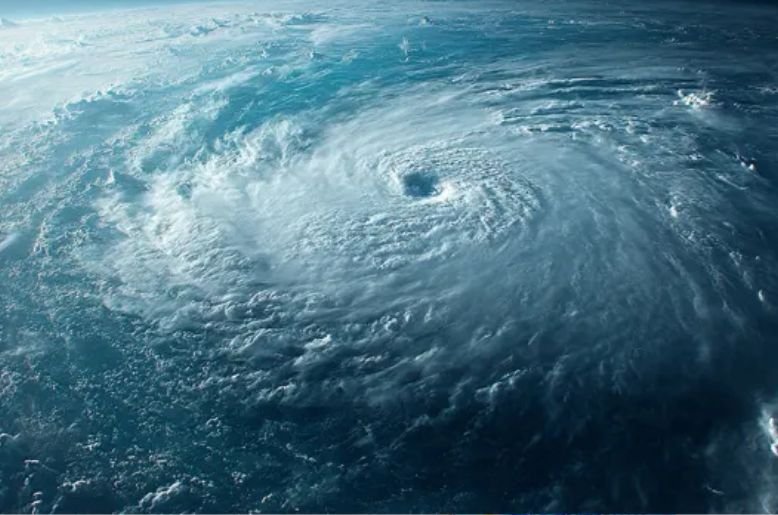
Web desk: India has begun large-scale evacuations ahead of Cyclone Montha, which is intensifying over the Bay of Bengal and expected to hit the country’s east coast on Tuesday, officials said.
Nearly 50,000 people have been moved to relief camps in coastal areas of Andhra Pradesh and Odisha as authorities prepare for strong winds and heavy rainfall.
All schools and colleges in the affected regions have been ordered to close. Additionally, holidays for emergency workers have been cancelled to assist with rescue and relief operations.
According to the India Meteorological Department (IMD), Cyclone Montha is likely to strengthen into a severe storm before making landfall near Andhra Pradesh’s coastline.
The storm, currently about 160 kilometres southeast of Machilipatnam, is expected to bring winds reaching 90 to 110 km/h.
Meanwhile, in Tamil Nadu’s Thiruvallur district, continuous northeast monsoon rains have caused Nathamadu Lake to overflow. This has resulted in flooding of homes in low-lying areas near Avadi, with water levels rising above two feet.
Disaster management teams are on alert as well, as per the reports.
Officials are confirming that evacuations from coastal villages in Kakinada district have already begun.
Cyclone Montha: Critics Question Readiness
Disaster response teams in Andhra Pradesh have so far evacuated around 38,000 people from low-lying and vulnerable areas, according to a state disaster management official.
The government estimates that nearly four million people could be affected by Cyclone Montha as it moves closer to the coast.
Authorities have set up 1,906 relief camps and 364 school shelters as evacuations continue across 1,238 vulnerable villages, the state’s Minister for Communications, Nara Lokesh, said in a social media post.
Schools and colleges will remain closed until Wednesday, and fishermen have been warned to stay off the sea.
Train and flight services have also faced partial disruptions.
In Odisha, officials said about 32,000 people have been shifted from vulnerable areas to relief shelters as part of precautionary measures.
Some have dismissed this as a publicity stunt, questioning whether the relief measures are adequate for the scale of the threat.

Some have pointed to a deeper issue: the growing impact of climate change.
Cyclones are natural weather events, but they are becoming stronger and more destructive due to rising ocean temperatures caused by pollution and greenhouse gas emissions.
And many have pointed out earlier that India is a major contributor to pollution in the region. It has gotten so bad that ‘cross-border pollution’ has started to affect Pakistan as well.
Climate experts warn that severe cyclones are becoming more frequent and intense in South Asia due to global warming.
Rising temperatures caused by greenhouse gas emissions have made such storms more powerful and unpredictable.
India’s eastern coastline has always been prone to cyclones, but recent years have seen an alarming increase in intensity.
The 2023 cyclone season was among the deadliest in recent history, killing 523 people and causing over $2.5 billion in damage.

Cyclone Montha: Vulnerable Zones
As Cyclone Montha approaches India’s eastern coast, questions are being raised over the unevenness of preparedness and the vulnerability of certain populations, reports the Indian Media.
The critics point to persistent weaknesses in infrastructure resilience and the protection of marginalised communities.
The coastal belt of Andhra Pradesh and adjoining districts remains highly vulnerable due to several factors:
- Dense populations living in low-lying areas are prone to flooding.
- Heavy reliance on agriculture and fishing, both of which are dependent on fragile coastal ecosystems
- Limited infrastructure in remote mandals makes evacuation and relief operations challenging.
- Historical data show that even moderate cyclones can trigger over 210 mm of rain in 24 hours, causing flash floods and landslides in Rayalaseema.
The fisheries sector has been hit particularly hard. 985 fishing boats were guided to safety as part of emergency measures.