
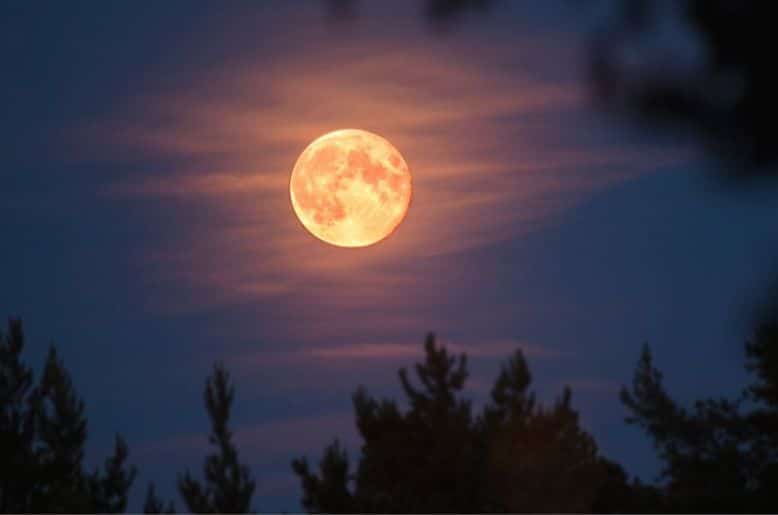
Earth has picked up a second moon, though anyone looking for it beside the familiar one in the night sky will come away empty-handed.
The new arrival, named 2026 QQ8, is a small asteroid just one to two metres wide. Earth’s gravity pulled it into a temporary orbit in April, but it went unnoticed until August.
Hungarian astronomer Krisztián Sárneczky spotted it on August 20. At first, scientists could not tell whether it was a natural space rock or a piece of an old spacecraft. Further checks with telescopes in Arizona and Hawaii later confirmed it was natural. The International Astronomical Union’s Minor Planet Center then officially catalogued it on October 29.
Don’t get too attached to it. The mini-moon is expected to escape Earth’s pull sometime in December or January and then carry on with its journey around the sun.
At its closest, 2026 QQ8 is about 568,000 kilometres from Earth. That is roughly one and a half times the distance to the Moon. Sadly for stargazers, it is far too small and faint to be seen with the naked eye, or even with a regular amateur telescope.
Could it hit us? Astronomers say there is no known risk of that happening. Even if it did enter our atmosphere, a rock this small would most likely burn up harmlessly.
Temporary moons like this are not as rare as they may sound, and Earth has had others before. One, an asteroid called 2020 CD3, stayed trapped by Earth’s gravity for about three years. Scientists believe our planet may have at least one of these short-term visitors at any given time.