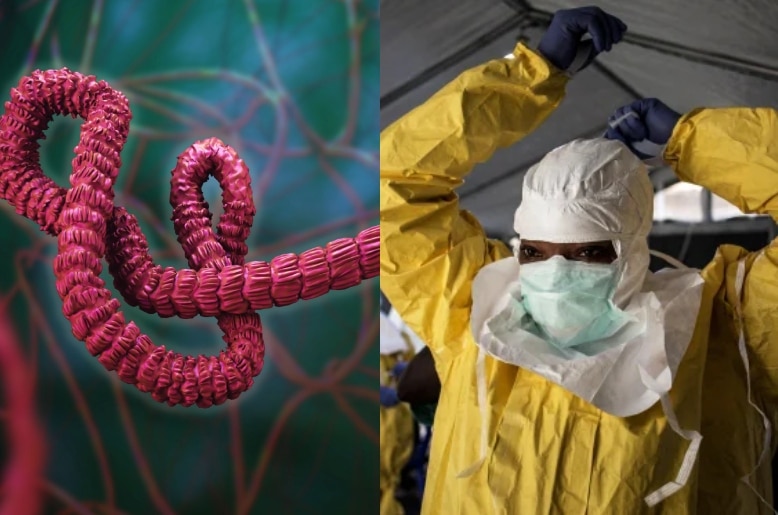
The Ebola outbreak in the Democratic Republic of the Congo (DRC) and Uganda is now a matter of “public health emergency of international concern”.
The World Health Organisation (WHO) has declared a global health emergency after this outbreak in Africa.
WHO Director-General Tedros Adhanom Ghebreyesus said that neighbouring countries are at high risk of further spread.
Current number of cases after the Ebola outbreak
Congo’s eastern Ituri province reported 246 suspected cases and 80 deaths so far.
Two confirmed cases were reported in neighbouring Uganda. Ugandan officials said a 59-year-old man who died on Thursday had tested positive.
The WHO advised that Congo and Uganda establish emergency operation centres to monitor, trace, and implement infection-prevention measures.
It is pertinent to mention that there is no proven cure for Ebola, with the average fatality rate being around 50 per cent, according to the WHO.
Symptoms of Ebola disease
- Fever
- Headache
- Weakness and fatigue
- Sore throat
- Unexplained bleeding
- Gastrointestinal Symptoms
- Loss of appetite
Note: Ebola spreads exclusively through direct contact with the blood or body fluids of an infected, symptomatic person or animal.
Ebola disease is caused by a group of viruses, known as orthoebolaviruses (formerly ebolavirus). These viruses can cause serious illness that, without treatment, can cause death. Orthoebolaviruses were discovered in 1976 in the Democratic Republic of the Congo and are found primarily in sub-Saharan Africa.
Earlier, a cruise ship was hit by hantavirus. Recently, a Canadian passenger who travelled on the cruise ship MV Hondius has tested positive for the disease.