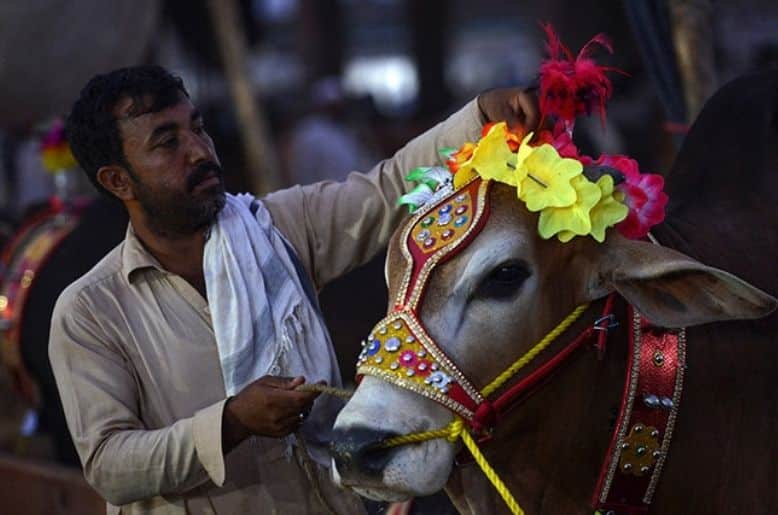
With Eidul Azha 2026 approaching, cattle markets across Pakistan are witnessing heavy activity as traders display sacrificial animals and people rush to buy them.
Major cities, including Lahore, Islamabad, Karachi, Peshawar, and Quetta, as well as smaller towns, have set up dedicated cattle markets. These markets will remain open until the third day of Eid.
Traders have brought a wide range of sacrificial animals to the markets, but many citizens are struggling with rising prices due to inflation. The cost of animals has increased sharply this year.
For example, a goat that previously sold for around Rs50,000 is now being sold for more than Rs100,000. Prices of larger animals have also gone up, making them unaffordable for many buyers. Citizens are calling on authorities to control prices and stop artificial inflation.
Traders say they expect buying activity to increase as Eid gets closer. They explain that higher costs of animal feed, transport, and care have pushed prices up this year.
Safety and hygiene arrangements
Authorities have introduced special measures to ensure the safety of both animals and people. The Livestock Department, Punjab Saaf Rahain Program, and Rescue 1122 have set up medical, sanitation, and emergency camps in cattle markets.
Teams are spraying animals to protect them from Congo virus and lumpy skin disease. Officials are also focusing on cleanliness, parking, clean water supply, and traffic control in and around markets.
Provincial authorities are also monitoring illegal cattle markets strictly. They have deployed CCTV cameras, drones, and special police teams to ensure security, especially for women and children. Under the instructions of Punjab Chief Minister Maryam Nawaz Sharif, control rooms are operating to handle complaints quickly, and temporary waste collection points have also been set up to keep markets clean.
