
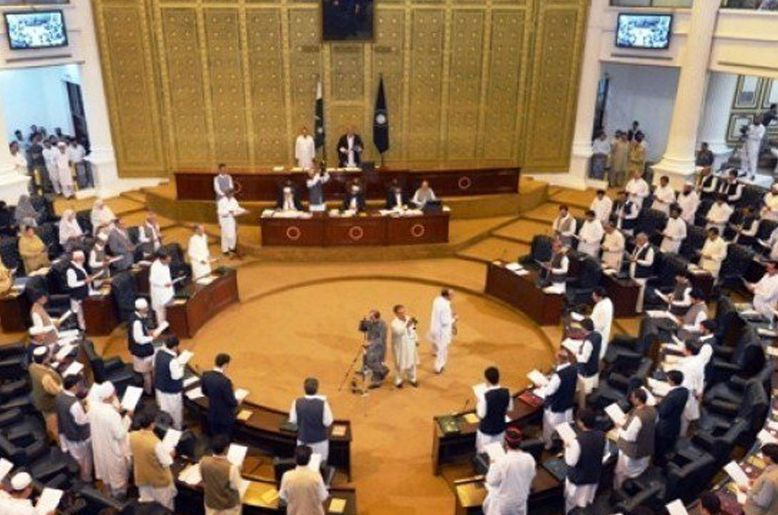
The process of reviewing 74 laws passed by the Khyber Pakhtunkhwa Assembly during the Pakistan Tehreek-e-Insaf (PTI) government’s tenure has begun, with legislation covering 20 government departments set to come under scrutiny.
The provincial Law Department has formed a special committee to examine the legislation and directed it to submit its recommendations to the relevant authorities within seven days.
According to sources, the review will cover laws relating to the prosecution system, public sector universities, medical teaching institutions and the powers and privileges of the provincial assembly.
The committee will examine the existing legal provisions and recommend which laws require amendments and which could be revised or withdrawn. However, no final decision has so far been announced to repeal or amend any of the laws.
The review extends beyond a technical examination of legislation, covering several aspects of the provincial administrative structure, the authority of public institutions and the enforcement of laws.
The scrutiny of 74 laws concerning 20 departments is aimed at determining whether administrative and legal procedures introduced under the previous legislation require further changes.
KP prosecution service amendment act 2025 under review
The Khyber Pakhtunkhwa Prosecution Service Amendment Act 2025 is also among the laws being reviewed, with possible amendments or withdrawal reportedly under consideration.
The prosecution system plays a key role in criminal proceedings and the state’s conduct of legal cases. Any proposed changes to the law could therefore have implications for the way criminal cases are pursued.
The legislation has also attracted attention in the context of cases related to the May 9, 2023 incidents.
Legal circles are particularly interested in whether any proposed amendments to the prosecution law could affect ongoing trials or investigations. However, no decision has been announced to terminate any specific case or suspend its proceedings.
The potential legal implications will become clearer only after the committee submits its recommendations and the relevant authorities make a final decision.
University and medical teaching laws also under scrutiny
Legislation governing public sector universities and medical teaching institutions is also part of the review.
These laws deal with institutional administration, powers and governance structures. The committee will assess whether the existing legal framework meets current administrative and legal requirements and whether amendments are necessary.
Provincial Assembly’s powers and privileges
Laws concerning the powers and privileges of the provincial assembly have also been included in the review.
These provisions form an important part of the province’s parliamentary and administrative framework, covering the authority of the assembly, legislators’ privileges and the legal scope of relevant offices.
The committee will examine the legal status and practical implementation of these provisions before making recommendations.
Review follows imposition of governor’s rule and emergency
The development comes after the imposition of Governor’s Rule and emergency measures in Khyber Pakhtunkhwa, amid a broader review of provincial affairs, the government structure and administrative arrangements.
The scrutiny of legislation passed during the PTI government’s tenure is part of this wider exercise.
