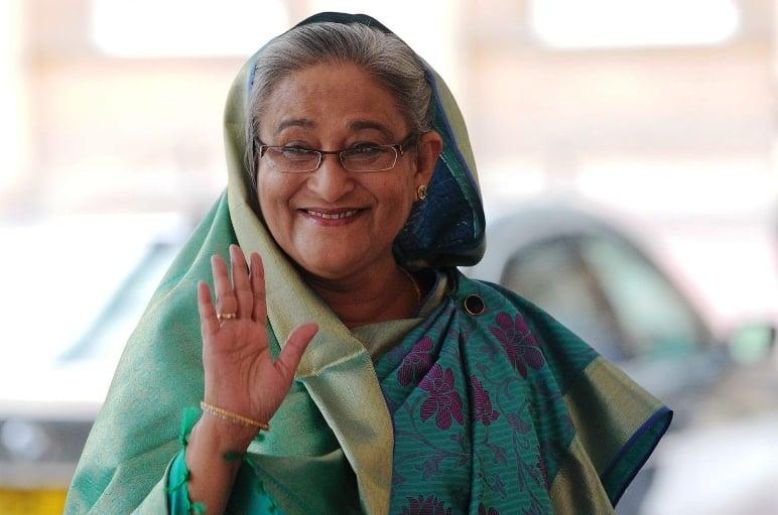
Haseena Wajid is a prominent political leader and the longest-serving Prime Minister of Bangladesh. She has played a central role in shaping modern Bangladesh through her leadership of the Awami League and her two long terms as Prime Minister. Born into the Tungipara Sheikh family in Gopalganj, she is the daughter of Sheikh Mujibur Rahman, the founding president of Bangladesh.
Her political journey spans decades, with her leadership influencing Bangladesh’s governance, infrastructure development, and international relations. Haseena Wajid has been a key figure in Bangladesh’s fight for democracy, often navigating challenges posed by political opposition, military rule, and social unrest.
Early life and political beginnings
Haseena Wajid was born on 28 September 1947. Her early life was marked by her family’s political influence, yet she had little direct involvement in politics until the tragic assassination of her father, Sheikh Mujibur Rahman, in 1975.
Following this, she spent years in exile, which shaped her resolve and understanding of political challenges. In 1981, Haseena returned to Bangladesh and became President of the Awami League. Her leadership during this period was crucial in organizing opposition against military rule.
She played a key role in the 1990 uprising that restored parliamentary democracy, collaborating with her political rival Khaleda Zia in what became known as the “Battle of Begums.”
First term as prime minister (1996–2001)
Haseena Wajid first became Prime Minister after the June 1996 general election. Her initial term focused on stabilizing the government, improving economic conditions, and enhancing social services. During this time, she faced challenges typical of post-dictatorship nations, including restoring democratic institutions and building public trust in governance.
Her government worked on infrastructure projects, health, and education, laying the groundwork for long-term development in Bangladesh.
Second term and longest premiership (2009–2024)
Haseena Wajid returned as Prime Minister after winning the 2008 general election. This period marked significant economic growth, infrastructure expansion, and social development in Bangladesh. Her government prioritized modernization projects, industrial growth, and international trade relations.
However, her second term also drew criticism. Allegations of political consolidation, human rights abuses, and limitations on press freedom emerged. The government faced accusations of corruption, embezzlement, and electoral irregularities in the 2014, 2018, and 2024 elections.
Despite controversy, Haseena Wajid’s leadership remained influential, and she was recognized internationally. She was named among Time magazine’s 100 most influential people in 2018 and listed by Forbes as one of the 100 most powerful women in 2015, 2018, and 2022.
Political challenges and 2024 uprising
In July 2024, Bangladesh witnessed the quota reform movement protests, which escalated due to government crackdown, resulting in numerous casualties. This unrest led to a major political shift. Haseena Wajid was ousted from power during the July Revolution and fled to India amid the non-cooperation movement.
Subsequently, in November 2025, she was convicted in absentia by the Bangladeshi International Crimes Tribunal on charges related to crimes against humanity. The verdict included a death sentence, which she rejected, claiming political motivation behind the trial.
Leadership style and achievements
Haseena Wajid’s leadership can be summarized by her strong vision, resilience, and political strategy:
- Strong Governance Focus: She prioritized economic growth, infrastructure, and social development programs.
- Resilient Leadership: Overcame years in exile and political opposition to maintain a strong presence in national politics.
- Global Recognition: Her premiership brought international acknowledgment for her influence and contributions to global politics.
Her government-initiated development projects that improved roads, energy, healthcare, and education, leaving a lasting impact on Bangladesh’s modernization.
Legacy and global recognition
Haseena Wajid is regarded as one of the longest-serving female heads of government in the world. Her policies and decisions have shaped Bangladesh’s political landscape for decades.
While her leadership faced criticism for centralizing power, her influence on the country’s economic and social progress is undeniable. International recognition, including Forbes and Time listings, reflects her status as a global political leader.
She has inspired women in politics and served as a model for resilience, strategy, and political commitment in South Asia. Read our full coverage on the connection between Imad Wasim’s second wife Nyla Raja and Imran Khan and the latest updates from the cricket and political world.
Conclusion
Haseena Wajid’s career is a story of resilience, political strategy, and long-term leadership. From her early struggles to her long tenure as Prime Minister, she has left an indelible mark on Bangladesh’s political and social landscape.
Despite challenges and controversies, her role in governance, economic development, and international diplomacy remains influential. Haseena Wajid continues to be a significant figure in discussions about Bangladesh’s past, present, and future.
Frequently asked questions
Who is Haseena Wajid?
Haseena Wajid is a Bangladeshi politician and the country’s longest-serving Prime Minister.
What political party does she lead?
She has been the president of the Awami League since 1981.
When was her first term as Prime Minister?
Her first term was from 1996 to 2001.
What are her key achievements?
Economic growth, infrastructure development, social programs, and global recognition.
Why was she ousted from power in 2024?
She was removed after the July Revolution and the non-cooperation movement due to protests and political unrest.