
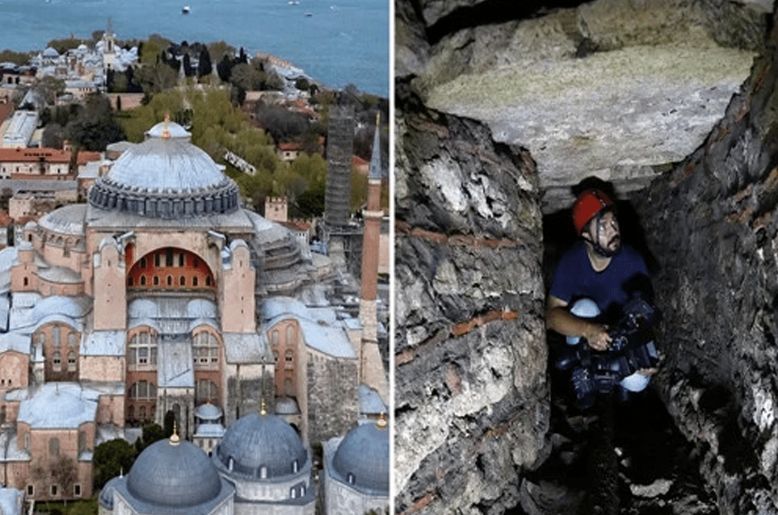
The ruins of an ancient underground network of tunnels, which have been laid under the historic Hagia Sophia Mosque in Istanbul, Türkiye for centuries, have been brought to the surface.
Now, after some 3,000 tonnes of debris have been excavated, experts have gained access to these concealed passageways, which had long remained buried in soil.
Excavation and cleaning of these historic tunnels started in February 2025, according to foreign media reports. This project has enabled the archaeologists to gain access to areas of Hagia Sophia that had previously been inaccessible.
During its October 16 presentation in the city, archaeologist Hasan Fırat Diker stated that the tunnels date back to the Roman era, about 1,600 years ago.
He said these passageways were once used for water supply and drainage purposes and some were also used as secure passages.
It has also been noted that some of the underground structures are even older than the current Hagia Sophia building. The present building of Hagia Sophia was built in 537 AD by the Byzantine Emperor Justinian I, according to historical records.
It is interesting to note that for many years experts have known of the existence of these tunnels, but most of their sections were inaccessible due to the debris and soil.
Because of recent cleaning and excavation, researchers have been able to fully examine this ancient underground system.
It may help to shed light on the architecture, urban planning and ancient water supply systems of the Romans and Byzantines, experts say.