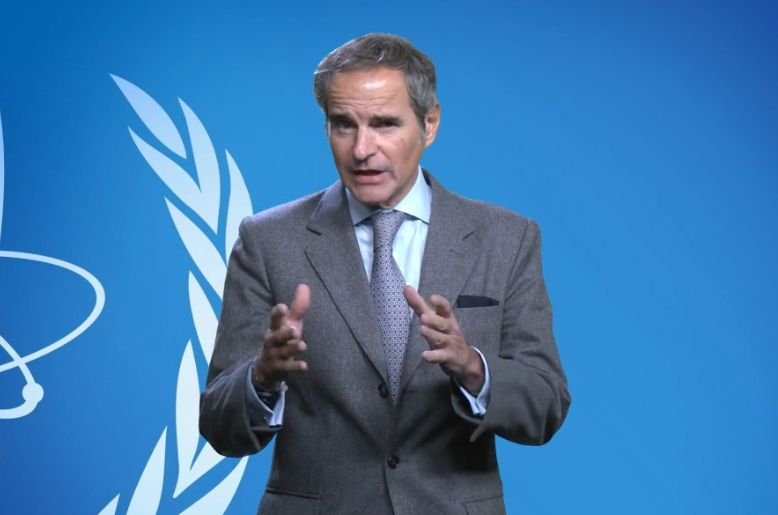
Mr Rafael Mariano Grossi, Director General of the International Atomic Energy Agency (IAEA), has lauded the Pakistan Atomic Energy Commission (PAEC) for its vital contributions to the peaceful applications of nuclear technology, particularly in the fight against cancer.
In a special video message issued from the IAEA headquarters in Vienna and shared on the Agency’s official website, Director General Grossi reaffirmed the IAEA’s commitment to continue supporting Pakistan in its endeavours to utilise nuclear science for socio-economic development.
Highlighting the alarming rise of cancer worldwide, Mr Grossi noted that the disease claims over 10 million lives globally each year, with more than 100,000 deaths reported annually in Pakistan alone.
He praised PAEC for its proactive response to this crisis, specifically citing the establishment of a robust network of 21 cancer hospitals across Pakistan, the development of a highly professional team of oncology specialists and the recent inauguration of the Kashmir Institute of Nuclear Medicine, Oncology and Radiotherapy (KINOR) in Azad Kashmir, PAEC’s 21st facility, which was formally opened by Prime Minister Muhammad Shehbaz Sharif last week.
Reflecting on his previous visit to Pakistan, the DG recalled productive discussions with the PM Muhammad Shehbaz Sharif regarding the expansion of IAEA-Pakistan cooperation.
He made special mention of his visits to the NORI Hospital in Islamabad and INMOL Cancer Hospital in Lahore, where he observed firsthand the high quality of diagnostic and treatment facilities.
“I am particularly pleased to have inaugurated the first CyberKnife facility in Pakistan’s public sector,” Mr Grossi stated.
He further commended the partnership of NORI Islamabad as an IAEA “Rays of Hope” Anchor Centre, noting that such centres serve as regional hubs for training and capacity building.
Looking toward the future, Mr Grossi warned that cancer mortality could increase by 75% by the year 2050.
While acknowledging the significant strides made through international cooperation, he emphasised that “much has been done, but much more remains to be done” to bridge the gap in cancer care equity globally.