
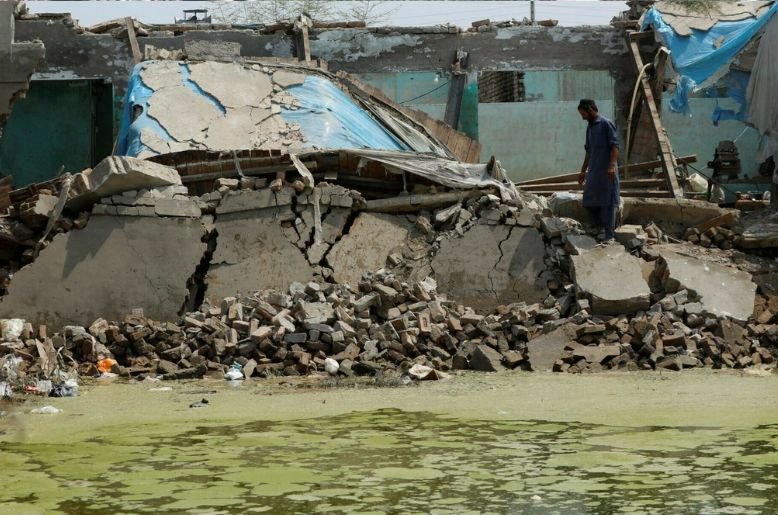
Last year’s devastating floods left a trail of destruction across the country, claiming several lives, particularly among people living near waterways and flood channels. A similar painful situation could occur this year, as hundreds of illegal structures on rivers and drains across the country remain intact.
Despite a nationwide operation launched after last year’s floods to remove encroachments from waterways and flood channels, hundreds of illegal structures on rivers and drains across the country remain intact, according to media reports.
The reports revealed that a total of 560 encroachments in Punjab, Sindh, and Khyber Pakhtunkhwa remain unremoved. Overall, authorities identified 3,249 encroachments nationwide, of which 2,689 have been cleared so far. A province-wise analysis shows that Punjab led the anti-encroachment drive, reporting 2,708 cases. Of these, 2,557 encroachments have been removed, while action is still pending in 151 cases.
However, the situation in Sindh remains the most alarming, where progress has been minimal. Out of 164 identified encroachments, only six have been removed, leaving 158 illegal structures still standing. In Khyber Pakhtunkhwa, authorities reported 377 encroachments. Of these, 126 have been cleared, while 251 cases remain unresolved. No data regarding encroachments in Balochistan has been provided so far. Officials warn that encroachments on rivers and waterways significantly increase the risk of flooding and cause widespread damage during the monsoon season.
The Federal Flood Commission has stated that it is in continuous coordination with provincial governments to ensure the removal of illegal structures from rivers and storm drains. The 2025 monsoon floods have once again highlighted Pakistan’s vulnerability to environmental disasters, raising serious questions about preparedness and long-term planning to mitigate flood risks.
Experts and officials warn that the floods are not an isolated event but a clear indication of the consequences of delayed and inadequate preventive measures. Every year, floods result in the loss of lives and livelihoods, extensive damage to infrastructure, and repeated identification of systemic weaknesses.
However, critics argue that despite these recurring disasters, little progress has been made toward developing effective and standardised response mechanisms. Analysts stress that Pakistan must shift its focus from reactive relief efforts to long-term resilience and prevention. They emphasise the need for coordinated planning among federal and provincial authorities to reduce the impact of future floods.
Read more: ‘Ramazan Nigahban Package’: Subsidised food items announced for special markets


