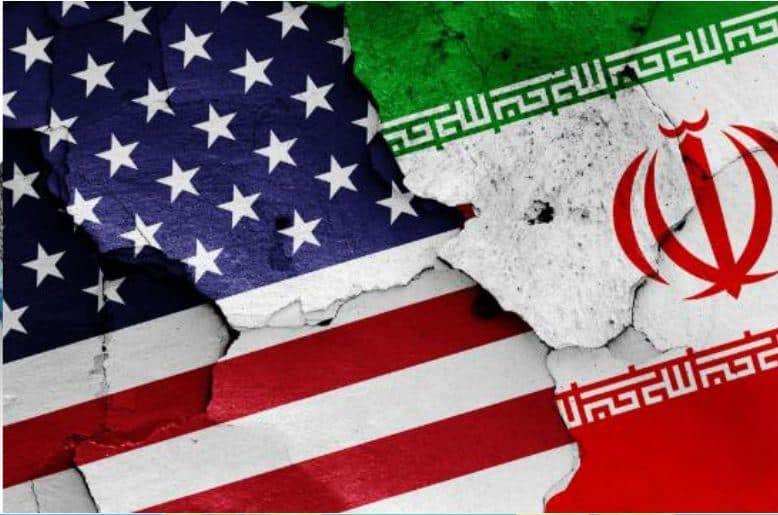
When Iran’s current geopolitical strategy and the importance of the Strait of Hormuz are viewed through a strategic lens, it becomes clear that this is not merely a regional geographical contest, but rather a new dimension in the global balance of power.
Iran, whose geography has emerged as a ‘global lifeline,’ is no longer just a state; it has become a strategic centre of gravity in international politics, one through which passing tides appear to grip the very breath of the global economy.
In January and March 2026, following open military aggression by US and Israeli forces on Iranian territory, Iran exercised its inherent right of self-defence under Article 51 of the UN Charter. By skillfully linking this right with the geographical sensitivity of the Strait of Hormuz, Iran elevated itself from a regional actor to a global power capable of influencing the pulse of the international economy.
By asserting this right within its maritime domain, Iran has demonstrated to the world that the Strait of Hormuz is not merely a waterway, but an ‘economic artery’ under Tehran’s sovereign watch, one that underpins global equilibrium.
This strategic shift reflects a broader reality, in the 21st century, the centre of power has moved away from stockpiles of nuclear weapons towards the concept of ‘chokepoint power,’ where the closure of a single maritime passage can shake the entire global economic structure.
Viewed through the theoretical framework of modern political thinkers, Farrell and Newman, Iran’s position, that global energy security and its own national sovereignty are two sides of the same coin, has turned the Strait of Hormuz into a strategic asset that diminishes the relevance of conventional military power.
Iran has made it clear that any interference with its territorial integrity would directly impact industrial nations and the economic stability of global governance. In essence, any challenge to Iran’s sovereignty would send shockwaves through global markets.
The practical manifestation of this power is evident in reports by international organisations and financial institutions, which show that within just one month, Brent crude oil prices surged from $70 to $120, while US and European stock markets experienced declines exceeding 10%. These figures are not mere economic indicators, they reflect a stark reality, the global economy can no longer function while ignoring Iran’s strategic interests. The silent language of data tells a story far more alarming than any war slogan.
The recent inaugural address of Iran’s new Supreme Leader, Syed Mojtaba Hosseini Khamenei, further underscored this resolve. He affirmed that Iran would continue the mission of its fallen predecessors by using this maritime corridor as a shield against its adversaries, as it reinforces Iran’s central position in global affairs.
His warning, that any miscalculation by opponents could trigger a global energy crisis, captures the essence of this strategic reality, in the game of geopolitics, Iran holds a piece capable of overturning the entire economic board.
From a legal standpoint, under the 1982 UN Convention on the Law of the Sea and its 1996 ratification, Iran has emerged as a coastal state with sovereign rights over its waters and transit routes. This 90-nautical-mile-long and merely 21-mile-wide passage, shared between Iranian and Omani waters, is not just a geographical coincidence, it is a natural fortress within which Iran is shaping both its survival and new rules of global politics. It is no longer just a waterway, but a “strategic trench” for the global economy.
Despite prevailing misconceptions, the reality remains that the tension embedded in these waters has become one of the defining strategic narratives of our time.
Even the United States, Israel, and other global powers have come to recognise that Iran has transformed its geographical constraint into its greatest strength.
Today, whether the Strait of Hormuz remains calm or turbulent, it appears to determine the future of global politics. This “chokepoint” is not just a route, it is where power, law, and geography converge to shape a new chapter in world history.
Traditional international law and rulings of the International Court of Justice, particularly the landmark Nicaragua v. United States (1986) case, affirm that a state subjected to aggression has the full right to take necessary and proportionate measures to defend itself.
Iran’s response to US and Israeli actions has made it clear that it has become a power capable of reshaping global economic calculations. Iran understands that just as its own economy depends on oil revenues, the industrial and emerging economies of both the West and the East rely on the uninterrupted flow of oil, liquefied natural gas (LNG), and goods through the Strait of Hormuz. This makes it a vital lifeline for China, India, Japan, South Korea, and the European Union.
Another factor strengthening Iran’s position is the harsh reality that, contrary to popular belief, there is no viable operational alternative to this maritime route. Existing pipelines in Saudi Arabia and the United Arab Emirates can transport only a limited portion of crude oil, and there is no alternative route for LNG. Qatar, the world’s largest LNG exporter, depends entirely on the Strait of Hormuz for its shipments.
This geopolitical reality grants Iran the capacity not only to influence energy flows but also to hold the economic stability of major industrial powers in its grasp.
The international community, particularly energy-consuming nations, cannot absolve itself of responsibility. Many countries, including NATO member states in Europe and major Asian economies have deliberately refrained from joining any US-led military coalition, despite their heavy dependence on the Strait of Hormuz.
This reluctance and silence further reinforce the perceived legitimacy of Iran’s position and signal implicit recognition of US and Israeli actions as unlawful.
This passage is no longer just a water route for the world economy but a ‘strategic trench.’ While misconceptions regarding this waterway persist, the reality remains that the ambition hidden within its waves has become the most significant strategic manifestation of the modern era.
It is a focal point where law, geography and power intersect-reshaping the contours of global order. Recognising this shift is not a concession, but a prerequisite for stability in an increasingly interconnected world.
Therefore, the United States must acknowledge both its strategic miscalculation and Iran’s “chokepoint power,” so that the world’s economic breathing space can be restored.