
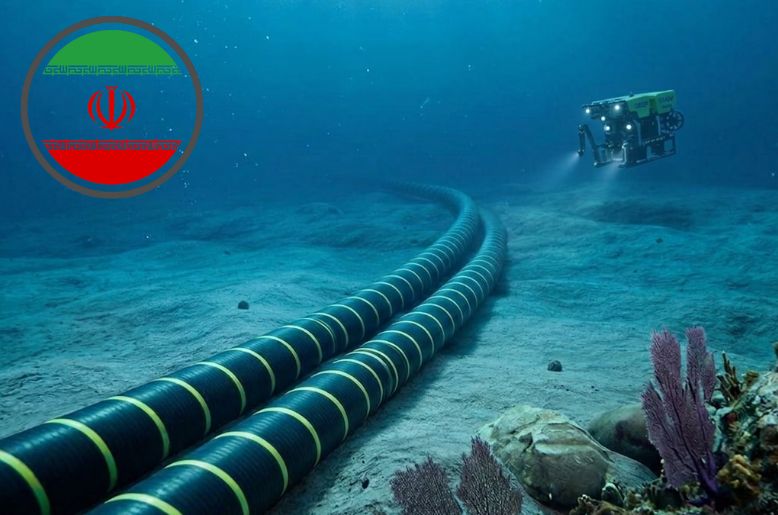
Iran has clearly warned it will target undersea internet cables in the Gulf if the US and Israel launch further attacks against the country.
According to Reuters, two senior officials said that Tehran could target the cables if diplomacy with Washington failed and fighting resumed.
One said Iran would seek to prevent repairs after any attack, potentially prolonging disruption to internet connections and other communications.
“If Iran is attacked, there will be no more red lines,” one official said, warning Washington against escalating the conflict.
The officials provided few details about how or where the proposed attacks might be carried out. Their claims have not been independently verified.
Yadollah Javani, deputy head of political affairs for Iran’s Islamic Revolutionary Guard Corps (IRGC), said on Wednesday that Iran could target seven major internet cables running beneath the Strait of Hormuz if Iranian infrastructure came under attack.
The strait, which separates Iran and Oman, connects the Gulf with the Gulf of Oman and the Arabian Sea. It is also a key route for energy supplies and international data connections.
Undersea cables carry about 99% of global internet traffic, according to the International Telecommunication Union.
Damage to multiple cables could slow internet services and disrupt financial transactions, e-commerce and cloud computing, analysts say.
The scale of any disruption would depend on whether operators could redirect data through alternative routes and how much spare capacity those connections had available.
Repairs could also prove difficult during a conflict. Higher insurance costs, security concerns and delays in obtaining permission to enter territorial waters could leave damaged cables out of service for longer.
Tehran has not publicly announced plans to target cables in the Red Sea.
The reported plans come as Iran has warned that a renewed US military campaign could prompt a stronger response than previous attacks.
Mohsen Rezaei, a senior Iranian security official, has warned that US-linked digital infrastructure across the Gulf, including data centres and artificial intelligence facilities, could be targeted if hostilities resume.

