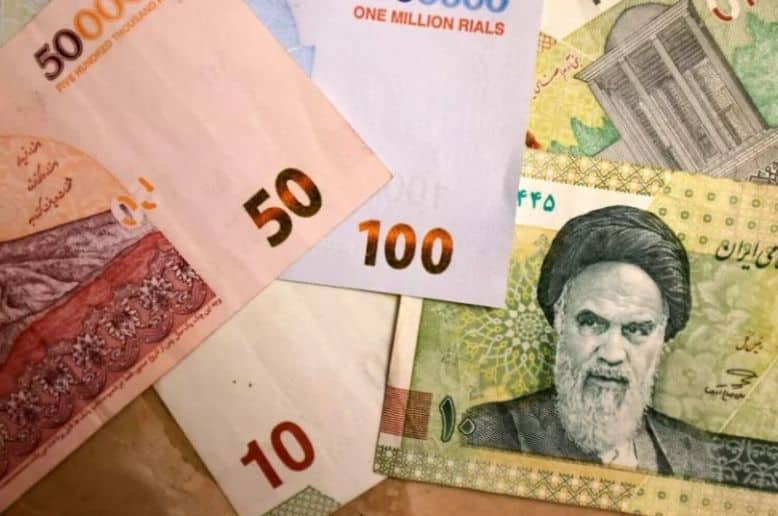
The Iranian rial continues to attract interest in Pakistan, with currency dealers and small-scale investors actively trading the currency despite its sharp depreciation in global markets.
According to market dealers, the official interbank exchange rate remains largely unchanged, with one Iranian rial worth around PKR 0.0002 today, June 30, 2026. However, in Pakistan’s open market, 10 million Iranian rials (one crore) are currently being traded for approximately PKR 6,000 to PKR 7,500, compared with PKR 8,000 to PKR 10,000 recorded earlier this month.
The renewed demand is being driven by speculation that the Iranian currency could recover if international sanctions on Iran are eased and diplomatic relations with the United States continue to improve.
Globally, the Iranian rial remains one of the world’s weakest currencies. A single US dollar currently exchanges for more than 1.37 million rials in international markets, while rates in Iran’s open market exceed 1.6 million rials, highlighting the significant gap between official and market exchange rates.
Chairman of the Exchange Companies Association of Pakistan, Malik Bostan, said the current investor interest is based on expectations of a future appreciation in the rial. He recalled that after the partial lifting of sanctions on Iran in 2016, the value of 10 million Iranian rials surged from around PKR 10,000-12,000 to nearly PKR 60,000, as investors anticipated further gains. However, the re-imposition of US sanctions in 2018 reversed those gains.
Bostan said recent diplomatic developments have once again fueled optimism. He noted that before the latest tensions, 10 million rials were trading between PKR 10,000 and PKR 13,000, but later dropped to around PKR 2,000 before recovering to approximately PKR 4,000 following the signing of a Memorandum of Understanding (MoU).
He said many investors believe the currency could appreciate significantly if sanctions are eased and Iran regains access to frozen overseas assets, although he cautioned that the investment remains highly speculative.
According to Bostan, failure of negotiations or renewed conflict could push the value back to around PKR 2,000, while a lasting diplomatic agreement could potentially lift it to between PKR 60,000 and PKR 100,000 per 10 million rials.
He advised retail investors to treat the rial as a short-term speculative investment, recommending that they book profits once the value reaches PKR 6,000 to PKR 8,000 rather than waiting for higher returns. He also urged investors to avoid risking large amounts of money, suggesting investments be limited to between PKR 10,000 and PKR 100,000.
It is pertinent to mention here that a sudden and significant rise has been seen in the value of the Iranian rial in Pakistan’s currency market which has led to its high demand.
After recent developments and reports of agreements at the regional and global level, investors and business circles increased buying of the Iranian rial, leading to a shortage of the currency in the market.
According to market sources, rising demand has pushed the Rial’s price in Pakistan to unusual levels. One hundred million Iranian Rials is now being traded at around Rs10,000 to Rs13,000, compared to Rs2,500 to Rs3,000 before tensions and conflict-like conditions.
Currency dealers say a large number of people have recently started purchasing Iranian rials, reducing its availability in the open market. Higher demand and limited supply have driven prices sharply upward.
Some buyers are also purchasing the currency as an investment, expecting further gains in its value. At the same time, demand remains from people involved in trade with Iran and border-related transactions.
Market experts say such unusual movements in currency markets can have several reasons, including demand and supply, global conditions, political situation, and market expectations. They add that close monitoring is needed as sharp fluctuations can cause losses for both buyers and traders.
Currency dealers warn that if supply does not improve, further volatility in prices may be seen in the coming days.
Also read: Pakistan’s weekly inflation rises as vegetable and chicken prices surge