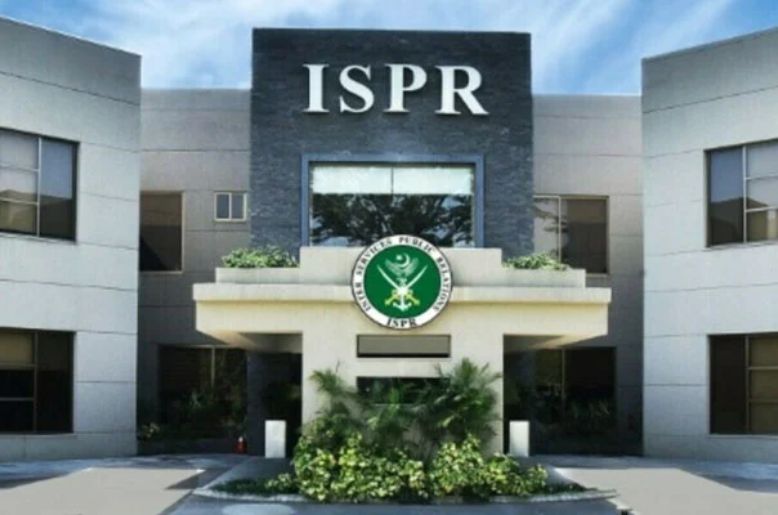
The Inter Services Public Relations (ISPR) has rejected the Indian documentary about Operation Sindoor, accusing India of using a dramatic and inaccurate account of the conflict to portray its military performance as a success.
The ISPR, the media wing of Pakistan’s armed forces, said the film Sindoor 2 presented a version of events designed for domestic audiences rather than an impartial account of the military confrontation.
The statement comes more than a year after what Pakistan refers to as Marka-e-Haq. Islamabad says its forces successfully responded to Indian military action during the confrontation.
India has described Operation Sindoor as a military operation targeting what it said were militant infrastructure following the Pahalgam attack.
ISPR said that the film attempted to link a speech by Pakistan’s army chief on April 16, 2025, with the Pahalgam attack on April 22.
It said the documentary provided no evidence establishing such a connection.
The Pakistani military also questioned India’s subsequent claim that three suspects in the Pahalgam attack were identified and killed on July 28, 2025.
“If Operation Sindoor was launched to punish those responsible for Pahalgam,” ISPR said, India would have to explain whom it had punished when the operation began on May 7.
The Indian authorities have not accepted Pakistan’s interpretation of the events.
A central disagreement concerns the outcome of the military confrontation.
ISPR rejected the documentary’s description of Operation Sindoor as a “100% mission success”, saying Pakistani forces had prevented Indian objectives from being achieved.
Pakistan says it shot down eight Indian military aircraft during the confrontation.
India has disputed Pakistan’s claims regarding aircraft losses, while Indian officials have acknowledged losses but rejected Islamabad’s wider account of the conflict.
ISPR also said Pakistan subsequently launched Operation Bunyan-un-Marsoos, during which it claimed to have struck 26 Indian military targets using missiles, aircraft, drones and artillery.
According to the ISPR, the documentary acknowledges that hostilities ended following contact between the Directors General of Military Operations of India and Pakistan and an agreement to halt military operations.
Pakistan said this was inconsistent with the portrayal of Operation Sindoor as an exclusively unilateral Indian victory.
ISPR also highlighted the involvement of the United States in efforts that led to the ceasefire, arguing that the development demonstrated that the conflict ended through military and diplomatic engagement rather than an unconditional Indian victory.
Read more: Electricity to remain off in Islamabad on Aug 18 for safety reasons: IESCO
Also read: Pakistan Connect reaches PS-105 constituency of Karachi to hear daily problems of residents
