
The protest call issued by Jamiat Ulema-e-Islam-Fazl (JUI-F) chief Maulana Fazlur Rehman has failed to attract public support across Khyber Pakhtunkhwa, with residents of Peshawar and other major cities rejecting the party’s call for demonstrations.
The JUI-F central leadership had called for province-wide protests in response to growing criticism of Fazlur Rehman over allegations of corruption and his confrontational stance towards national institutions. However, the call failed to generate any significant public response, as routine life continued uninterrupted across the province.
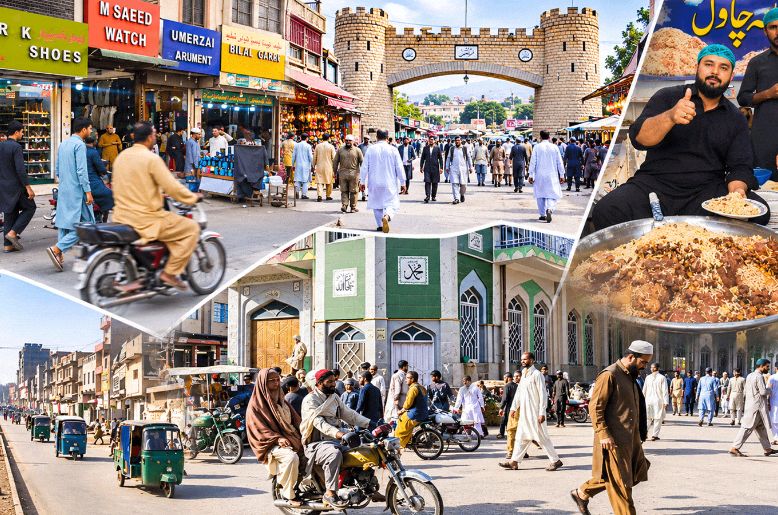
In Peshawar, no major gathering or demonstration by JUI-F workers was witnessed. The city’s main commercial centres, including the historic Qissa Khwani Bazaar and Khyber Bazaar, remained busy, with markets open, traffic flowing normally and restaurants and food outlets crowded with customers.
The situation was no different in other major cities, where residents appeared more focused on their daily activities and livelihoods than the party’s protest campaign.
In Dera Ismail Khan, local residents openly criticised Fazlur Rehman and the party’s local representatives, accusing them of prioritising political interests over public welfare.
A local resident said that Maulana Fazlur Rehman and other political representatives had suddenly remembered public gatherings and protests to protect their political interests, while ordinary people continued to struggle with rising inflation.
He pointed out that flour prices had reached Rs165 per kilogram, while essential commodities such as sugar and cooking oil had become increasingly unaffordable for low-income families. He questioned why politicians who had won elections from the constituency three or four times had failed to address these problems.
The resident further alleged that political leaders and influential figures only approached people when they needed votes, abandoning them during difficult times. He said poor residents of D.I. Khan would not participate in the JUI-F protest.
A local woman also criticised the party’s nationwide protest and sit-in call, claiming that the gathering had failed to attract supporters. According to her, only eight to 10 people were present at the designated protest site even after the scheduled starting time of 10:30am.
She accused the JUI-F leadership of using protest politics to secure a share in government and political power, arguing that whenever the party received a share in government, everything appeared to be fine, but when its political demands were not met, it took to the streets.
The woman questioned whether the party’s leaders had ever staged similar protests over unemployment, inflation, terrorism or other fundamental problems facing ordinary citizens. She alleged that the demonstrations were driven by personal and family interests rather than public concerns.
She also criticised the party’s leadership over its attitude towards state institutions, saying the state had provided political leaders with opportunities to reach the highest positions in government and parliament. She stressed that the country and its institutions should not be treated as anyone’s personal property.
The woman further raised questions about the alleged accumulation of wealth by Fazlur Rehman and his family, claiming that his father had once possessed little more than an empty bag, while the family now allegedly had business interests worth billions of rupees in Indonesia, Malaysia, Gulf countries and elsewhere. She questioned the sources of this wealth. These allegations could not be independently verified.
Political observers said the lack of public participation in Peshawar and other major cities reflected growing public disinterest in protest-driven politics, with people increasingly prioritising their livelihoods and everyday concerns.
The failed response to the protest call has also raised questions about JUI-F’s ability to mobilise public support in its political strongholds, particularly as residents increasingly demand that political leaders focus on inflation, unemployment, security and other pressing public issues rather than political power-sharing.