
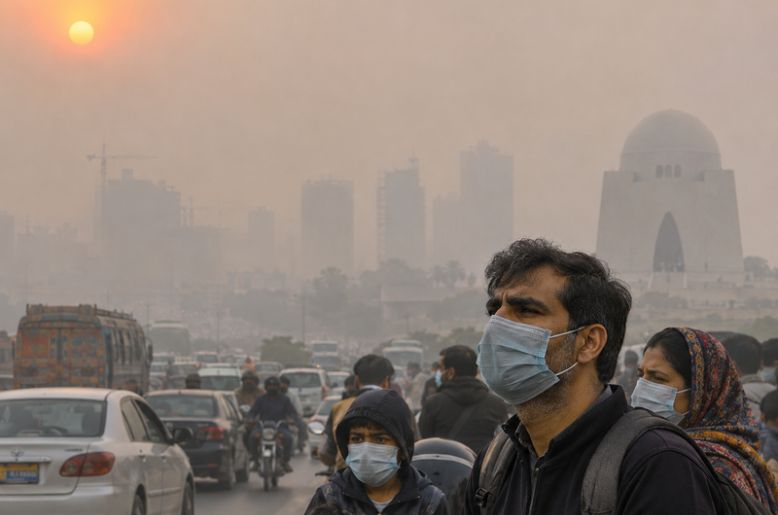
Air pollution in Karachi has reached alarming levels, with the port city climbing to second place among the world’s most polluted cities after its Air Quality Index (AQI) reached 236.
According to the latest report by a global air quality monitoring website, Karachi recorded an AQI of 236, placing the city’s air quality in the “very unhealthy” category and posing serious risks to public health.
The report indicated that the concentration of fine particulate matter in the air had exceeded the limits recommended by the World Health Organisation (WHO) several times over.
Falling temperatures and reduced wind speeds have further aggravated the situation, causing pollutants to remain suspended in the atmosphere.
According to international air quality standards, an AQI reading between 201 and 300 is classified as “very unhealthy”, indicating significant health risks for the general population.
Medical experts have warned that rapidly worsening air pollution in Karachi poses a serious threat to residents, potentially leading to breathing difficulties, sore throats, allergies and eye irritation.
Prolonged exposure to polluted air can also aggravate existing respiratory conditions, particularly among vulnerable individuals.
Health experts have advised children, elderly citizens and people suffering from asthma or other respiratory illnesses to avoid unnecessary outdoor activities.
Residents have also been advised to wear protective face masks while travelling outdoors and limit their exposure to polluted air.
The deteriorating air quality has raised serious public health concerns in Pakistan’s largest city, highlighting the urgent need for effective measures to control air pollution.