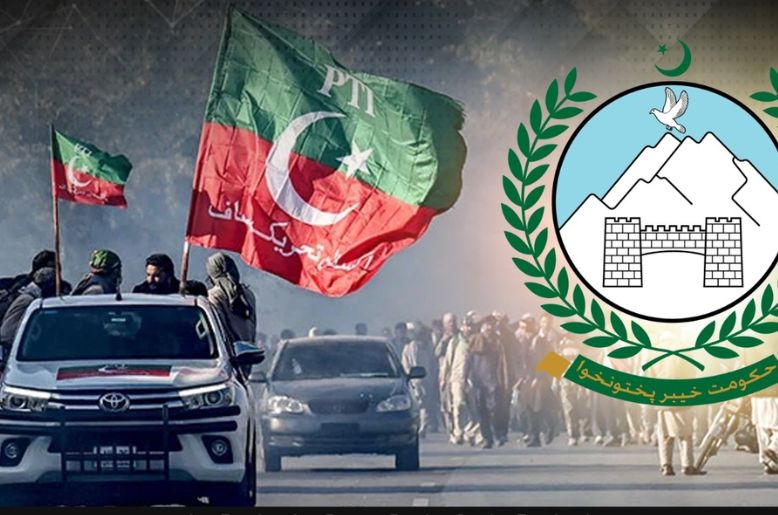
Rising incidents of terrorism in Khyber Pakhtunkhwa and criticism of the provincial government’s policies have intensified concerns over the security situation in the province. An investigative report stated that certain actions and policies of the Khyber Pakhtunkhwa government have weakened counterterrorism efforts at both the provincial and national levels and contributed to security gaps that have further deteriorated the situation.
Three terms in power: questions over peace and progress
According to the report, the Pakistan Tehreek-e-Insaf (PTI) has governed Khyber Pakhtunkhwa for a third consecutive term following the February 2024 elections. The report questions the provincial government’s performance on development, economic progress and counterterrorism.
The report alleges that the provincial government has failed to deliver on major promises relating to development, prosperity and security. It further claims that the government’s policies have contributed to weaknesses in the province’s response to terrorism. It further alleges that measures are being taken that could weaken the counterterrorism capabilities of the police and provincial administration.
However, these allegations should be distinguished from documented counterterrorism activity in the province. The Khyber Pakhtunkhwa Counter Terrorism Department reported carrying out thousands of intelligence-based operations in 2024, arresting hundreds of suspected militants and preventing numerous planned attacks.
Constitutional responsibility and security
The 18th Amendment significantly expanded provincial legislative and administrative authority, including by giving provincial assemblies legislative power over matters outside the Federal Legislative List.
Against this backdrop, the security situation in Khyber Pakhtunkhwa has remained a major challenge. The province has experienced persistent militant attacks targeting security personnel and civilians, with official and independent assessments documenting the scale of the violence.
The investigative report argues that the provincial government must do more to protect citizens and strengthen the institutions responsible for maintaining law and order. It alleges that continued weaknesses in governance and counterterrorism coordination are undermining efforts to restore peace.
The report concludes that the provincial government’s policies and actions require greater scrutiny and accountability amid the continuing threat of terrorism in Khyber Pakhtunkhwa.
Recently, the Khyber Pakhtunkhwa government’s move to approve amendments to the Police Act has drawn criticism, with opponents arguing that the proposed changes could weaken the capabilities and administrative autonomy of the police force, which plays a key role alongside the armed forces in combating terrorism.
Police and security personnel continue to operate on the front lines of the fight against terrorism, with many losing their lives in the line of duty. Critics therefore argue that any changes affecting police powers, command structures and administrative authority require transparent debate, clear justification and careful consideration of their potential impact on public safety.
The proposed Police Act 2026 would introduce changes to the appointment and transfer of senior police officers and increase the provincial government’s role in police policy and administration. The provincial government, however, says the legislation is aimed at improving accountability, strengthening oversight and establishing a clearer separation between policy and operational functions.
Amid a fragile law-and-order situation, critics have raised concerns about whether changes to the distribution of authority could affect the police force’s ability to respond effectively to terrorism and other security challenges.
Terrorism remains a major challenge in Khyber Pakhtunkhwa, while police personnel continue to face attacks. Against this backdrop, the proposed changes to the police command, appointments and policymaking structures have prompted questions about whether the timing and scope of the reforms are appropriate.