
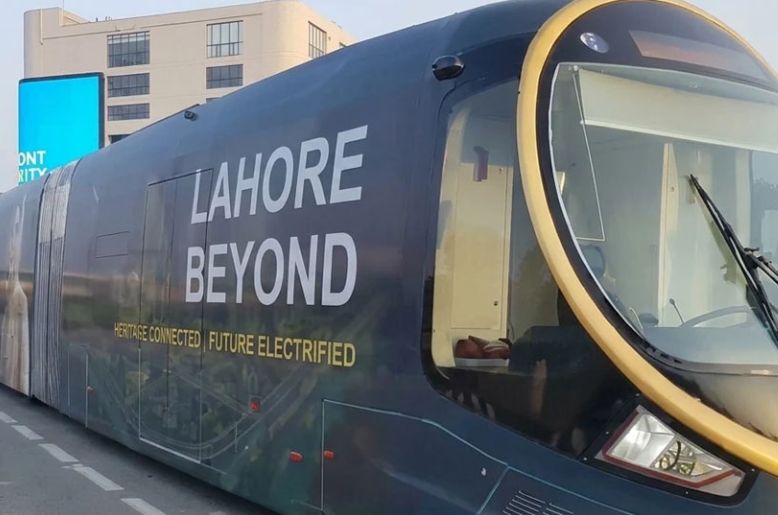
Punjab Chief Minister Maryam Nawaz Sharif has announced that Lahore’s trackless Super Autonomous Rapid Transit (SRT) tram service is expected to begin operations next week, describing the project as a major step towards modernising the province’s public transport system.
In a post on social media platform X, Maryam Nawaz said Punjab was entering a new era of modern development and future-oriented technology, adding that ongoing initiatives would create new opportunities for progress and prosperity.
The trackless tram is an electric public transport system that operates without conventional steel railway tracks. Instead, it uses specialised rubber tyres, sensors, GPS, digital mapping and automated guidance technology to follow a designated route on existing roads.
The project aims to improve urban mobility by carrying more passengers, reducing travel time and easing traffic congestion. The vehicles are powered entirely by electricity and consist of multiple connected coaches.
Trackless Tram Project in Lahore
Work on Lahore’s trackless tram project began in 2025. In August of that year, Maryam Nawaz conducted a trial run between Ali Town and Muslim Town to assess the vehicle’s performance under regular traffic conditions.
According to officials, the tram was imported from China and consists of three coaches, with a passenger capacity of approximately 320. It can reportedly travel around 40 kilometres on a single charge.
Expansion to other cities
The Punjab government’s proposed five-year transport plan also includes expanding modern rapid transit systems to other major cities, including Faisalabad and Gujranwala.
Lahore already has several public transport projects, including the Metro Bus, Orange Line Metro Train and electric bus services. The government says the introduction of additional electric transport options will help reduce air pollution, ease traffic congestion and improve commuting facilities.
How does trackless tram work?
The SRT, also known as a trackless tram, operates using what is described as Virtual Track Technology. Unlike conventional trams, it does not require physical railway tracks.
Its onboard sensors, GPS, digital mapping and automated guidance systems help it follow a digitally designated route on the road. Sensors also monitor surrounding obstacles and road conditions to support safe navigation.
Although Maryam Nawaz has announced that the service is expected to start next week, the government has yet to officially announce the final inauguration date, ticket fares and complete operational route details.