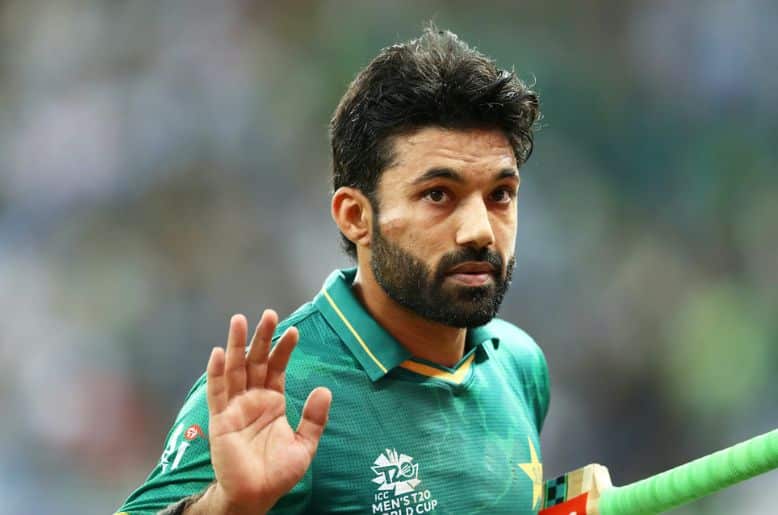
The Lahore High Court has dismissed national cricketer Mohammad Rizwan’s petition against the action of the National Cyber Crime Investigation Agency (NCCIA), ordering him to appear before the relevant forum and respond to the show-cause notice.
Lahore High Court Chief Justice Aalia Neelum heard the petition filed by former captain and national cricketer Mohammad Rizwan. During the hearing, the court expressed strong displeasure over the petitioner’s absence and for concealing facts.
Chief Justice Aalia Neelum remarked, ‘The petitioner should be heavily fined for concealing facts.’ The court clarified that the cricketer should go to the relevant forum instead of challenging the summons notices, appear there and formally respond to his show-cause notice.
Petitioner’s stance and lawyer’s arguments
Mohammad Rizwan himself did not appear before the court; however, he was represented by lawyer Umair Qazi. The lawyer submitted before the court that ‘good and bad performance in sport is part of the game.’ He claimed that the NCCIA had issued summons notices without justification and illegally.
The petitioner’s lawyer further informed the court that the cricketer had previously submitted a written response to the allegations through his legal representative, which the agency rejected and summoned him again. Therefore, he requested the court to declare this action null and void. However, the court rejected these arguments.
The legal dispute began when the NCCIA issued a show-cause notice to the national cricketer seeking an explanation regarding his performance and other related matters.
Instead of appearing before the agency in person and becoming part of the inquiry, Mohammad Rizwan chose to challenge the proceedings directly in the High Court.
The petition filed by him stated that the summons was an unjustified action against him and should be stopped through a court order.
It should be noted that this decision of the Lahore High Court reflects the legal principle that courts generally avoid intervening prematurely in departmental or institutional inquiries.
When a show-cause notice is issued by an institution, the legal requirement is that the concerned person should first defend himself before that forum.
Two important aspects emerge from this decision. First, discouraging the practice of bypassing institutional proceedings and directly seeking judicial relief.
Second, it also gives the impression that even prominent players are not exempt from accountability or questioning and must fulfil legal requirements like ordinary citizens.