
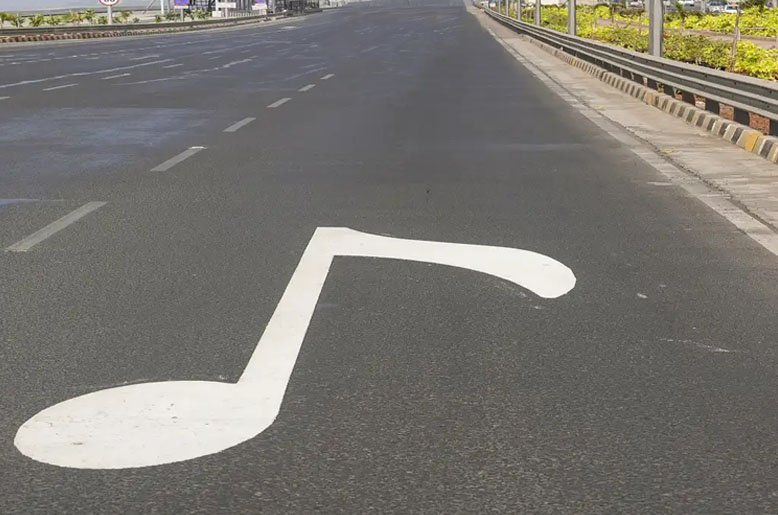
Mumbai’s first-ever musical road, a 500-metre stretch of the Coastal Road designed to play the Oscar-winning tune ‘Jai Ho’ as vehicles drive over it, is sparking debate among citizens and social media users. While officials hail it as a blend of engineering and entertainment, many locals say the project is an unnecessary distraction from more pressing road issues.
The melody strip runs northbound from Nariman Point towards Worli, just after vehicles exit the Coastal Road tunnel. Grooves cut into the road, known as rumble strips, produce sound vibrations when cars maintain speeds of 70-80 km/h. According to the Brihanmumbai Municipal Corporation (BMC), the music can even be heard with car windows closed. Warning signboards have been installed at several points to ensure motorists can adjust their speed safely.
However, the road has faced sharp criticism online. Many Mumbaikars question the sense of investing in such a novelty when other roads in the city remain riddled with potholes and poor maintenance. “Who asked for this?” wrote one user. Another commented, “Did we need more noise on our roads? Or did some genius think this would stop people from honking?”
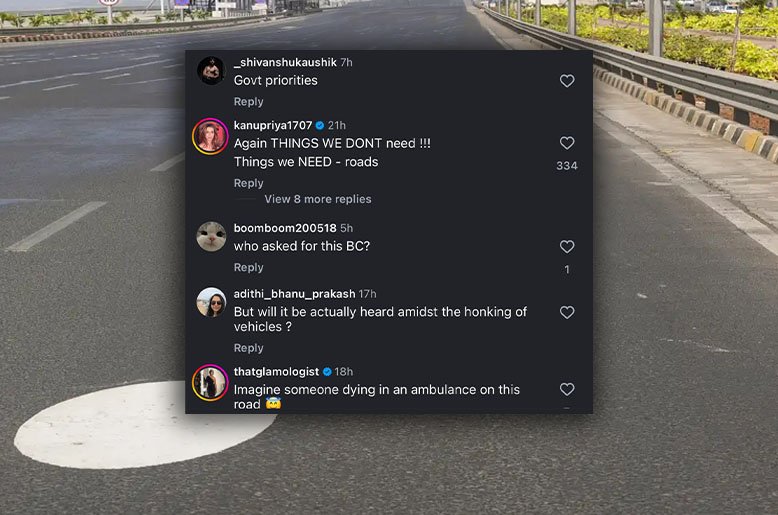
Some users jokingly suggested alternative songs. “Instead of ‘Jai Ho’, it should play ‘Jag Soona Soona Lagay’ because toll taxes are too high,” one social media post read. Others labelled it a waste of government funds, arguing that citizens already endure heavy traffic and high commuting costs. “Traffic jams and potholes first, music later,” said a critic.
The project, which cost around Rs6.21 crore, was executed with technical assistance from Hungarian experts and spearheaded by former MP Rahul Shewale. Chief Minister Devendra Fadnavis described the road as a pioneering step in urban innovation, noting that the technology could encourage consistent driving speeds and potentially improve road safety.
Globally, similar melody roads exist in Japan, Hungary, South Korea, and the UAE, but Mumbai’s is the first in India. While some commuters find the feature enjoyable, others remain unconvinced. “I don’t see the safety benefits, but it is surreal to hear a familiar tune during my drive,” said Nivedita Gupta, a local motorist.
The debate raises questions about urban priorities. For a city struggling with traffic congestion and ageing infrastructure, many residents feel that practical improvements should take precedence over creative installations. “Look at the priorities of the government,” a social media post read. “Music on the road is fine, but what about fixing the roads people actually use every day?”
Read next: Microsoft releases Windows 11 26H1 for Snapdragon X2 devices only


