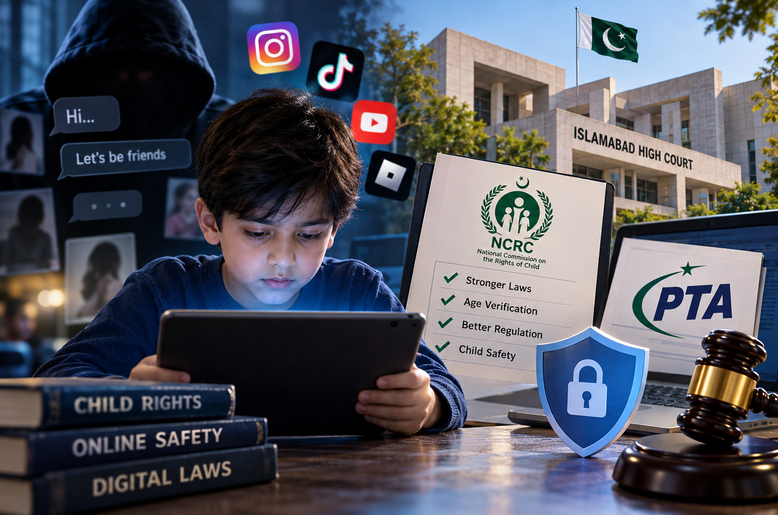
The National Commission on the Rights of Child (NCRC) has called for stronger laws to protect children from online grooming, exploitation and harmful digital content.
The commission submitted a response to the Islamabad High Court. The case concerns the use of social media by children under 16.
The case began after a petition called for new laws, age checks and stronger safety measures for children using social media.
The NCRC raised concerns about children’s online safety. However, it opposed a complete social media ban for users under 16.
It said stronger safety measures and better regulation could protect children while respecting their digital rights.
The commission recommended an effective age-verification system for digital platforms.
It also said child online safety should be included under the Digital Nation Pakistan Act. Social media and other digital platforms should have greater responsibility for protecting younger users.
The NCRC said the state is responsible for protecting children from online grooming, exploitation and harmful content.
It also recommended giving more resources to the National Cyber Crime Investigation Agency (NCCIA). This would help the agency investigate cases involving the online sexual exploitation of children.
The commission also called for special systems to deal with child exploitation.
It recommended reviewing the amended Prevention of Electronic Crimes Act from a child rights perspective. Necessary changes should also be made to improve children’s online safety.
The NCRC also called for measures to limit unnecessary online contact between children and unknown adults. It recommended proper legal and administrative safeguards for this purpose.
PTA calls for new legal framework
PTA told the court that it does not currently have the legal power to introduce mandatory age checks.
It also cannot prevent children under 16 from using social media under its existing powers.
PTA said such restrictions would require new laws and a clear policy framework.
The authority also said its powers to block illegal online content are limited.
Under the PECA Amendment 2025, a Social Media Protection and Regulatory Authority is being established. It will deal with complaints about illegal online content and related matters.
PTA also highlighted difficulties in blocking specific content on encrypted platforms.
It said HTTPS encryption can make it difficult to block individual content without affecting access to an entire website.