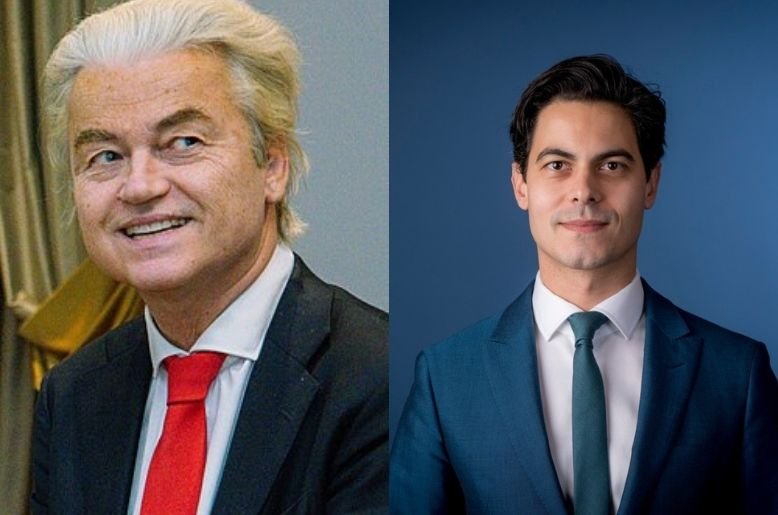
Early exit polls (a survey of people after they vote. It’s usually close, but not perfect) for the Netherlands national elections 2025 show D66 narrowly ahead with 27 seats, just in front of Geert Wilders’ PVV on 25.
The VVD is projected at 23, GreenLeft-Labour (GL-PvdA) at 20 and the CDA at 19, a picture that leaves the race too close to call until official results arrive.
In the Dutch proportional system, parties need 76 seats to form a majority, so coalition building will decide who governs.
With several parties signaling they won’t partner with the far right, the Netherlands national elections 2025 are likely to be followed by protracted coalition talks, even if D66 finishes on top.
D66’s late surge under Rob Jetten, a pro EU, climate focused platform pitched as a moderate alternative pulled centrist voters.
PVV emphasized migration and security but appears to have slipped from its 2023 high, while other right wing lists gained modestly.
Turnout by early evening was slightly below the previous election cycle but small late swings could still shift seat counts by one to three seats.
What parties campaigned on
- D66 (27 projected): centrist, pro-EU, climate focused party presented itself as a moderate, stable choice.
- PVV (25): focused on migration and security but still a major force, even if down from 2023.
- VVD (23), GL-PvdA (20), CDA (19): potential partners for coalition but several parties say they would not govern with PVV, which limits options.
What it means for Europe
The government that emerges from the Netherlands national elections 2025 will influence EU debates on climate policy, fiscal rules, and migration.
After a turbulent period culminating in the collapse of the previous government, investors and allies will watch for signs of a steadier hand in The Hague.
Exit polls tilt D66 27 vs PVV 25, with VVD 23, GL-PvdA 20, CDA 19.
No party is close to a solo majority, and with most ruling out PVV, the next few weeks will likely be dominated by complex coalition negotiations before the Netherlands knows its next prime minister.