An avalanche struck Broad Peak in Pakistan on Thursday. The mountain is the world’s 12th highest peak. Ten climbers lost contact with the outside world soon after.
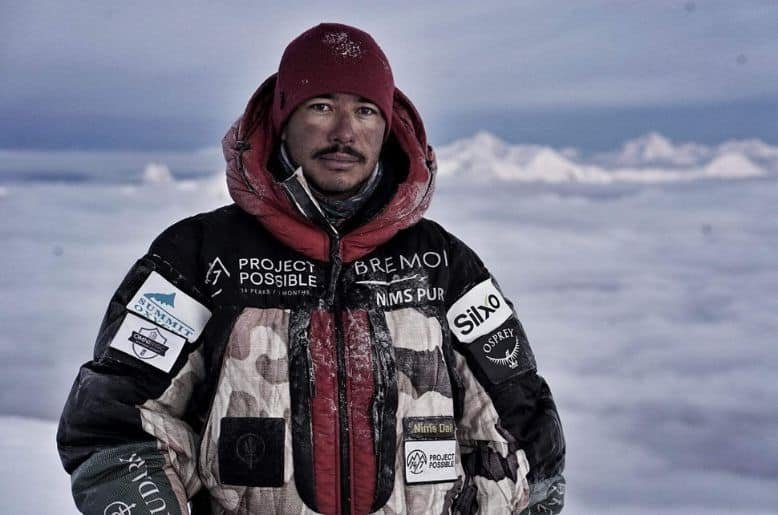
Among the missing is world-renowned mountaineer Nirmal Purja. He led the 10-person expedition. Rescue teams are now working around the clock to find the group.
The avalanche on Broad Peak
Broad Peak stands at 8,051 metres (26,414 feet). It sits in the Karakoram Range in northern Pakistan. The mountain is well known for its long summit ridge, which stretches about two kilometres. It is also known as a tough and dangerous climb.
The avalanche hit late on Thursday morning. GPS data shows it struck between 08:57 and 09:30 local time. The climbers have not been reached since. The group included both mountain guides and their foreign clients.
According to GPS tracker data, American climber Mallory Geis dropped 543 metres (1,781 feet) when the avalanche hit. Omani climber Nadhira Al Harthy dropped even further — 1,651 metres (5,417 feet). These figures give rescue teams a clearer picture of what happened on the mountain.
Three Nepali companies organized the expedition. These were Elite Exped, Seven Summit Treks, and Imagine Nepal.
Read More: Avalanche hits Broad Peak: Famous climber among 10 missing
Who is Nirmal Purja?
Nirmal Purja is one of the most celebrated mountaineers in the world. People also know him as “Nims Dai.” He holds several remarkable mountaineering records and is recognized globally for his achievements.
In 2019, Nirmal Purja climbed all 14 of the world’s 8,000-metre peaks in just over six months. This shattered the old record, which stood at nearly eight years. He named this mission Project Possible. Netflix later turned it into a documentary, 14 Peaks: Nothing is Impossible.
During that mission, Purja photographed a long queue of climbers waiting to summit Everest. The image went viral. It sparked a worldwide conversation about overcrowding on high mountains.
Purja spent 16 years serving in the British military. He joined the British Army in 2003 at just 18 years old. He later joined the elite Special Boat Service of the Royal Navy in 2009. His father and elder brothers all served as Gurkhas — Nepali soldiers with a long history in the British Army.
Queen Elizabeth II awarded him an MBE in 2018. This honour recognized his outstanding mountaineering achievements. In 2021, the Eastleigh Borough Council in southern England also gave him the Honorary Freedom of the Borough — its highest civic honour.
Other notable climbers missing
The full list of 10 missing climbers was released by the Alpine Club of Pakistan. It includes people from Nepal, Pakistan, the United States, Oman, and China.
American climber Mallory Geis was on her first major climbing trip to Pakistan. She had posted on social media in mid-June about her excitement ahead of the expedition, showing off new boots she had ready for the climb.
Pakistani climber Sohail Sakhi was also part of the group. This would have been his last remaining 8,000-metre peak in Pakistan. He summited K2 in 2025 and helped bring down an injured mountain guide on his descent.
Kili Pemba Sherpa is another big name on the list. He has reached Everest’s summit 15 times. In 2021, he was part of the historic K2 winter expedition that also included Nirmal Purja. He also guided double amputee Xia Boyu to summit Everest in 2018.
Pur Bahadur Gurung, known as Yukta, is certified by the International Federation of Mountain Guides Associations. He is close to completing the 14 peaks challenge. He was also part of the team that found a century-old boot believed to belong to British climber Andrew “Sandy” Irvine, who disappeared on Everest in 1924.
GPS trackers and rescue efforts
All climbers were carrying GPS tracking devices. Rescue teams located four of the trackers. However, no movement was detected from any of them. Officials could not confirm the condition of the climbers they belonged to.
The Pakistan Army quickly dispatched two rescue helicopters. Drones and ground teams also joined the search. Helicopters were staged at K2 base camp. Officials estimated it would take about four hours to climb to the trackers’ location, even with oxygen support.
Gilgit-Baltistan police later confirmed that four bodies had been recovered from the mountain. Their identities have not yet been made public.
Government responses
China’s foreign ministry said it was urgently working to verify the situation. One Chinese national, Wang Zhong, is among the missing. China offered to provide help based on Pakistan’s needs.
Nepal’s Tourism Department officially listed its six citizens as “missing.” It has not confirmed any deaths. Nepal’s embassy in Islamabad is coordinating closely with Pakistani authorities. Nepal’s Mountaineering Association is also working with the Alpine Club of Pakistan on rescue efforts.
The role of Nepali Sherpas
Nepal’s Sherpas play a vital role in Pakistan’s climbing season. Many spend the spring guiding climbers in Nepal. When the monsoon arrives, they head to Pakistan for its summer climbing window.
Pakistan’s mountains have grown in popularity as more climbers attempt to complete the 14 peaks challenge. Five of those 14 peaks are climbed from Pakistan. This has made Pakistan the second major workplace for Nepal’s Sherpas, after Nepal itself.
Researcher Medhavi Gulati notes that Sherpas are “the most efficient highly-skilled staff” in professional mountain guiding. Their experience and training across many mountain environments make them the most sought-after guides in the world.
Broad Peak’s deadly history
An Austrian team first reached the top of Broad Peak in 1957. Since then, hundreds more have made the climb. But dozens have also lost their lives on its slopes.
By March 2012, there had been 404 successful ascents and 21 deaths. That puts the fatality rate at around 5 percent. The year 2013 was particularly deadly, with at least six climbers killed.
The mountain’s difficult terrain and unpredictable weather continue to make it one of the most dangerous climbs in the world.
Rescue teams are pressing on with their search. Officials remain hopeful but cautious. The world is watching and waiting for news.