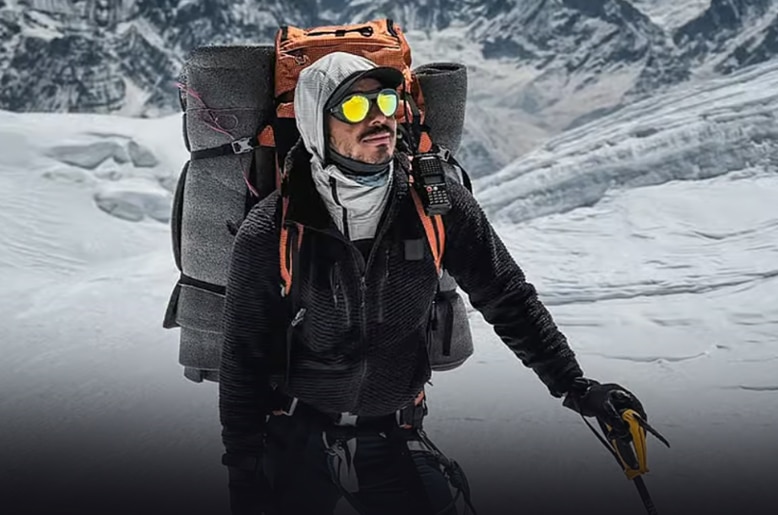
Renowned British-Nepali mountaineer Nirmal Purja, one of the world’s most celebrated high altitude climbers, has died after an avalanche struck Broad Peak in northern Pakistan, killing all 10 members of his expedition.
Elite Expeditions, the company leading the climb, confirmed Purja’s death on Saturday, saying it shared the news with “profound sadness and immense heartbreak”. The company also confirmed that the other members of the expedition did not survive.
The avalanche hit on Thursday as the multinational team was climbing Broad Peak, the world’s 12th highest mountain, in Pakistan’s Karakoram range. Regional authorities said the climbers were at an altitude of about 6,600 metres when the powerful avalanche swept through.
The expedition included six climbers from Nepal and four others from Pakistan, Oman, the United States and China. Pakistani officials had earlier recovered the bodies of American climber Mallory Geis, Omani climber Nadhira Ahmed Abdullah Al Harthy and Nepal’s Pur Bahadur Gurung. Rescue teams continue working in difficult conditions to recover the remaining bodies.
Naila Kiani, spokesperson for the Alpine Club of Pakistan, said tracking data suggested the climbers were thrown hundreds of metres down the mountainside by the avalanche. She described Purja as a fearless and highly experienced leader who had guided many successful expeditions.
Purja, 43, rose to international fame in 2019 after climbing all 14 mountains above 8,000 metres in just six months and six days, shattering the previous world record by more than seven years. His remarkable achievement later became the subject of the Netflix documentary 14 Peaks: Nothing Is Impossible.
Born in Nepal, Purja served for 16 years in the British military, including a decade with the special forces. He was appointed an MBE in 2018 for his achievements in extreme high altitude mountaineering and was also recognised as the first Gurkha to summit Mount Everest while serving in the British Army.
Only days before the expedition, Purja revealed on X that climbing Broad Peak had not been part of his original plan. He said he hoped to become the first person in history to climb all 14 peaks above 8,000 metres twice without supplemental oxygen.
In what has now become his final public message, he wrote: “Broad Peak, I ask for nothing but safe passage up and back down. I take zero mountains for granted.”
Broad Peak, standing at more than 8,000 metres, is regarded as one of the world’s most technically demanding climbs and has claimed dozens of lives over the years.
Read next: K2 summit push postponed after Broad Peak avalanche