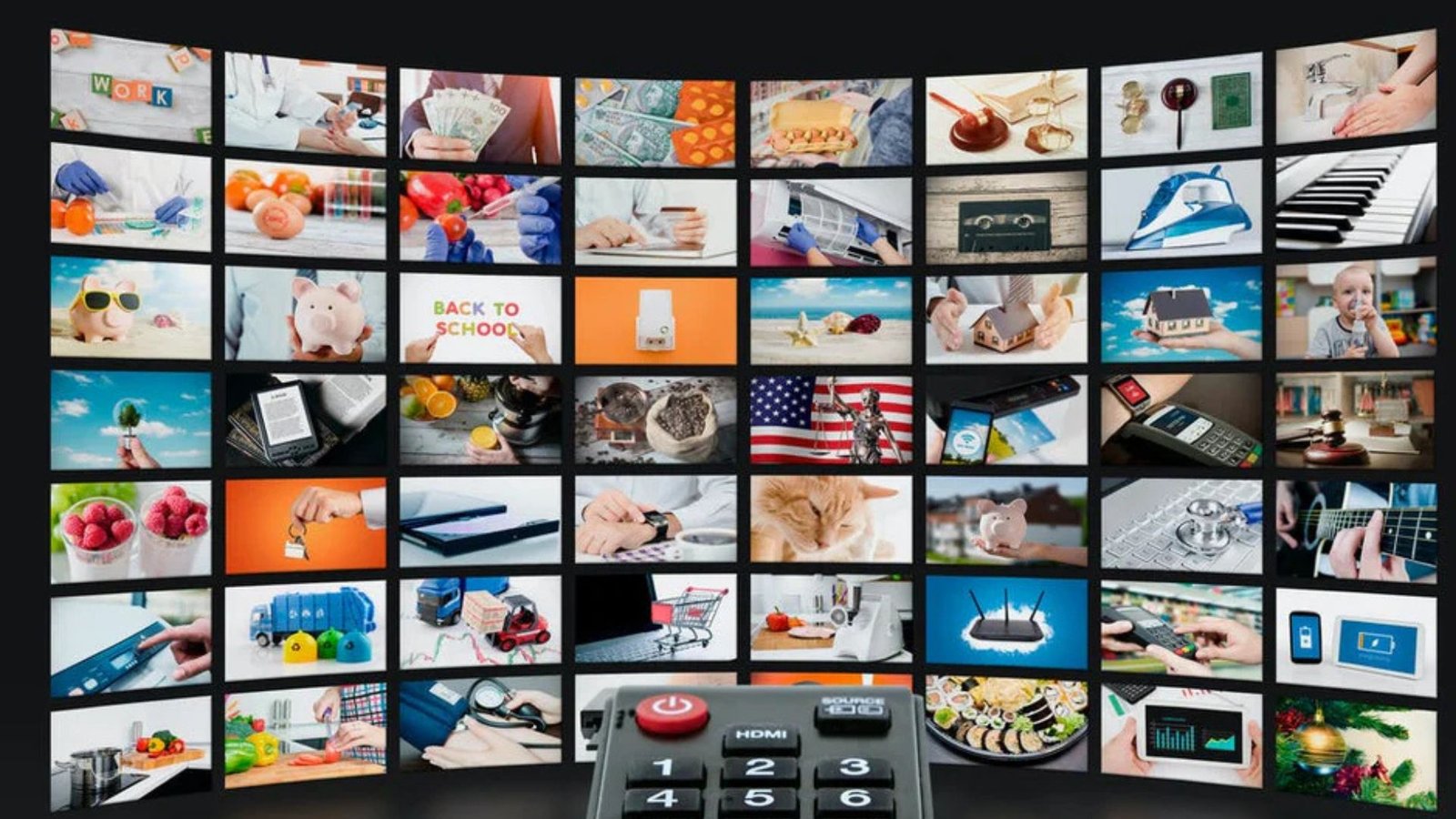
Web Desk: Internet Protocol Television IPTV, is rapidly reshaping how audiences around the world consume television, challenging decades-old broadcast and cable models as viewers shift toward internet-based, on-demand viewing.
Driven by faster broadband, smart devices and changing consumer habits, IPTV has emerged as a central force in the global media and telecommunications landscape.
IPTV delivers television content through internet networks rather than traditional satellite, cable or terrestrial signals. Instead of scheduled broadcasts, content is streamed as digital data packets and played on smart TVs, set-top boxes, computers or mobile devices.
The technology supports live television, video-on-demand libraries and time-shifted viewing, allowing users to pause, rewind or replay programs. Behind the scenes, IPTV platforms rely on cloud infrastructure, content delivery networks and software systems that manage user access, recommendations and billing.
As a result, television has become more interactive and personalized, giving viewers control over what they watch and when they watch it.
IPTV is accelerating the decline of appointment-based television. Audiences increasingly expect flexible viewing across multiple screens, while broadcasters and telecom operators are bundling IPTV with internet and mobile services to retain customers.
Meanwhile, higher bandwidth and technologies such as fiber optics and 5G are enabling high-definition and ultra-high-definition streaming at scale. Industry analysts say this shift has lowered entry barriers for content providers, increased competition and pushed traditional broadcasters to rethink distribution strategies.
At the same time, IPTV platforms are using data analytics to tailor content suggestions, deepening viewer engagement and reshaping advertising models.
Several IPTV services now operate at scale across different regions, reflecting diverse market models ranging from national telecom-backed platforms to global content aggregators.
Singtel TV in Singapore offers a hybrid of live channels and on-demand programming through broadband connections. South Korea’s Genie TV, operated by KT, combines local content with an extensive video library and interactive features.
In Europe, Freely aggregates free-to-air television into a unified internet-based platform, while Romania’s INES TV remains one of the region’s early IPTV adopters. Georgia’s MagtiCom IPTV provides internet-based television as part of a broader telecom offering.
On the technology side, companies such as Setplex power dozens of IPTV services globally by supplying the software backbone rather than consumer-facing platforms.
Other international IPTV services focus on large channel libraries, multilingual content and wide device compatibility, catering to global audiences seeking alternatives to traditional pay-TV.
Despite regional differences, most IPTV services share key characteristics. These include access across multiple devices, a mix of live and on-demand content, electronic program guides, cloud-based recording and high-definition streaming.
Security and content protection have also become central priorities as rights holders seek to safeguard intellectual property in an internet-driven environment.
Industry observers say IPTV’s expansion shows little sign of slowing. As connectivity improves and viewers demand greater flexibility, internet-based television is increasingly becoming the default mode of content delivery.
While challenges remain including regulation, piracy and infrastructure gaps in some markets IPTV is steadily redefining how television is produced, distributed and consumed, marking a fundamental shift in the global media economy.
Read more: Weather advisory amid rain and snowfall in Murree