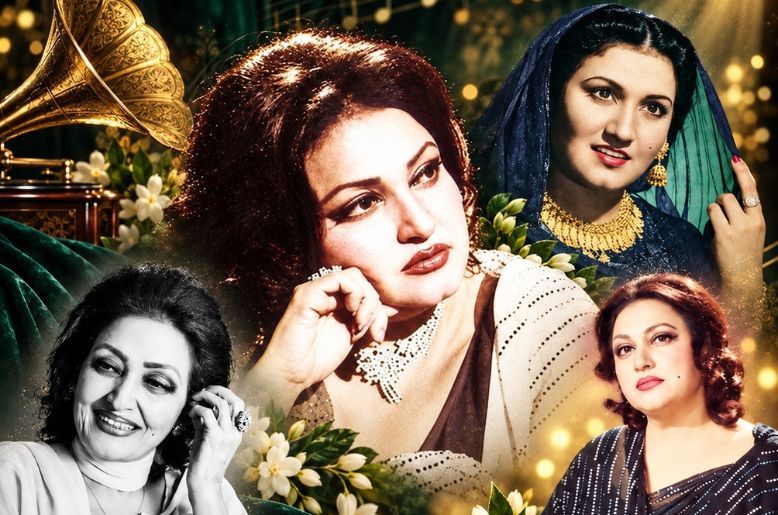
Pakistan marks the 100th birth anniversary of legendary singer Noor Jehan, widely remembered as the country’s Malika-e-Tarannum (Queen of Melody) and one of South Asia’s most influential voices.
Born as Allah Wasai in Kasur on September 21, 1926, Noor Jehan began performing at a very young age. Her exceptional singing and acting talent soon earned her recognition, eventually turning her into one of the most celebrated artists of the subcontinent.
Over a career spanning more than six decades, Noor Jehan recorded thousands of songs in Urdu, Punjabi and Sindhi. Her repertoire ranged from romantic songs and ghazals to folk music and patriotic anthems, allowing her music to reach audiences across generations.
Noor Jehan and Pakistan’s patriotic music
Noor Jehan’s voice became particularly significant during the 1965 war, when her patriotic songs were widely broadcast on radio and became a source of encouragement for soldiers and civilians.
Songs including “Ae Watan Ke Sajiley Jawano,” “Ae Puttar Hattan Te Nahi Wikde” and “Rang De” remain associated with the patriotic music of that era.
Her wartime contribution has been widely remembered by those who witnessed the period. Former soldier Subedar (retired) Taimar Shah said her songs helped raise the morale of troops and civilians during the conflict.
Noor Jehan also visited soldiers near the frontlines and performed for them, further strengthening her association with the national effort during the war.
A career that crossed borders
Noor Jehan started her artistic journey in British India before moving to Pakistan after independence in 1947. She had already established herself as a singer and actor through films including Khandan, Zeenat, Gaon Ki Gori and Jugnu.
After moving to Pakistan, she continued her successful acting career before eventually leaving the screen in the 1960s to concentrate entirely on singing.
Her famous songs included “Chandni Raatein,” “Mujh Se Pehli Si Muhabbat,” “Sanu Nehar Wale Pul Te” and “Muhinji Preet Naein, Muhinjo Pyaar Nao.”
She also worked across several languages, including Urdu, Punjabi and Sindhi, demonstrating the remarkable range of her voice and musical style.
Noor Jehan’s lasting legacy
Noor Jehan received several major honours during her lifetime, including the Tamgha-e-Imtiaz, Sitara-e-Imtiaz and Pride of Performance.
Her influence was also recognised by leading artists of the region. Indian singer Lata Mangeshkar praised Noor Jehan’s artistry, while legendary actor Dilip Kumar famously described her as unique in the world of music.
Noor Jehan died in Karachi on December 23, 2000, at the age of 74. More than two decades after her death, her songs continue to be played and remembered by millions.
As Pakistan celebrates 100 years since her birth, Noor Jehan’s enduring voice remains an important part of the country’s musical and cultural heritage.
