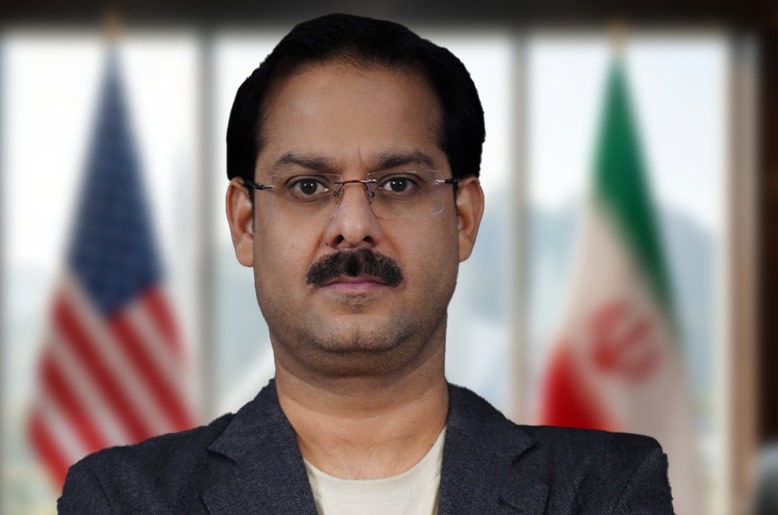
Author: Sajjad Bhatti, Broadcast Journalist & Digital Media Consultant
One month ago, on April 8, 2026, the geopolitical landscape of the Middle East shifted dramatically when the United States and Iran agreed to a ceasefire brokered by an unexpected but highly effective mediator, Pakistan.
For decades, Pakistan has navigated a delicate tightrope between its alliance with the United States and its shared border with Iran.
Today, it has transformed that precarious position into a bridge, achieving what many international observers thought impossible, bringing Washington and Tehran to the same table. While labeling Pakistan the “Great Mediator of the Century” is an incredibly optimistic title for a conflict that is still actively unfolding, there is no denying that Islamabad has pulled off a masterclass in crisis diplomacy.
Pakistan’s Civil-Military Synergy: PM Sharif & Field Marshal Munir’s Vital Roles
The success of this mediation effort stems from a highly unified front presented by Pakistan’s civilian and military leadership. Prime Minister Shehbaz Sharif and Field Marshal Asim Munir have effectively tag-teamed this diplomatic offensive, preventing a full-scale regional war that could have devastated the global economy.
Using the Military Channels, Pakistan COAS-CDF Field Marshal Asim Munir leveraged his direct channels effectively. His visit to Tehran on April 15, meeting with the Iranian top political and military IRGC leadership, was pivotal in keeping Iran engaged after the initial ceasefire. Furthermore, his rapport with US President Donald Trump, who publicly credited Field Marshal Munir for his role in extending the ceasefire on April 21, demonstrated a level of military-to-military and military-to-executive trust that proved essential in de-escalating the crisis.
On the other side, Pakistan’s civilian framework under Prime Minister Shehbaz Sharif, alongside Deputy Prime Minister Ishaq Dar, provided the political and diplomatic scaffolding. Hosting the marathon 21-hour “Islamabad Talks” at the Serena Hotel on April 11-12 facilitated the first direct, high-level engagement between the US and Iran since the 1979 Islamic Revolution.
Major Milestones Achieved in just one month, Pakistan’s mediation has yielded concrete, verifiable achievements:
- Halt to Immediate Hostilities: The April 8 ceasefire stopped the immediate exchange of fire, pausing a conflict that had already begun rattling global energy markets.
- The April 21 Extension: When the initial two-week ceasefire was set to expire, joint pressure from PM Sharif and Field Marshal Munir successfully convinced the US to indefinitely extend the pause, staving off Trump’s threats of a renewed offensive.
- Confidence-Building Measures: Pakistan successfully facilitated the evacuation and repatriation of the twenty-two crew members held aboard the seized Iranian container ship, MV Touska, acting as a crucial trust-building measure between the two adversaries.
The road ahead while Pakistan is achieving major milestones, it is important to ground our expectations in reality. The title of “Great Mediator of the Century” is a heavy crown, and the US-Iran conflict is not resolved just yet.
The Islamabad Talks, while historic, ended without a formal Memorandum of Understanding. Deep, structural red lines remain. The US insists on an end to Iran’s nuclear program and the reopening of the Strait of Hormuz, while Iran demands the lifting of sanctions, a permanent end to conflicts across all regional fronts (including Lebanon), and war reparations.
Just recently, Iran rebuffed efforts to start a second round of talks in Islamabad, protesting the US blockade of its ports, which led to Vice President JD Vance pausing his planned trip to Pakistan.
Pakistan has undeniably emerged as a major heavyweight mediator on the global stage by stepping up when the world needed an off-ramp; Islamabad prevented an immediate catastrophe. If Pakistan can continue to keep these two historical adversaries engaged and navigate the complex final hurdles regarding the Strait of Hormuz and nuclear constraints, it will undoubtedly secure its legacy as the architect of modern Middle Eastern peace.