
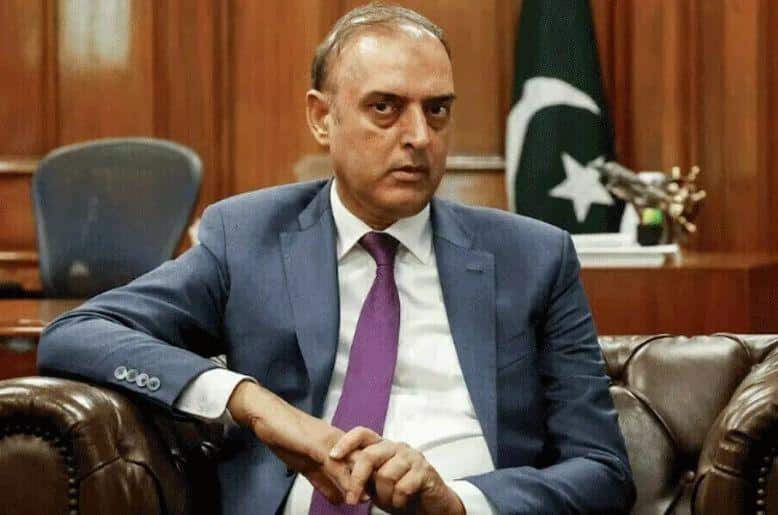
State Bank of Pakistan (SBP) Governor Jameel Ahmad has said that Pakistan’s key economic indicators have improved faster than expected at the start of the financial year, but the ongoing conflict in the Middle East has created new risks and increased uncertainty.
He made these comments during a meeting with senior representatives of global financial institutions and investment companies.
The meeting was held on the sidelines of the Spring Meetings of the International Monetary Fund and the World Bank from April 13 to 18, 2026.
JPMorgan, Barclays, Citibank, Jefferies, Franklin Templeton, as well as credit rating agencies Fitch, Moody’s and S&P Global also participated in these meetings.
Pakistan’s economy
The Governor of the State Bank said that before the conflict, Pakistan had made significant progress in stabilising the economy.
With a combination of prudent fiscal and exchange rate policies playing a significant role in bringing inflation closer to the target. This improved financial discipline and stabilised external reserves.
He said that in the first nine months of the current fiscal year, the average inflation rate was about 5.7 per cent.
While the external account remained in surplus, during which the State Bank’s foreign exchange reserves increased to $16.4 billion. This was mainly made possible by the bank’s purchases from the market.
According to Governor Jameel Ahmad, these reserves are expected to increase further to about $18 billion by June 2026. In this, the government funds and new bilateral agreements will also play a role.
He said that as a result of improved economic stability, a gradual and sustainable recovery in economic growth has been seen, and the real gross domestic product growth rate was recorded at 3.8 per cent in the first half of the fiscal year 2026.
He further emphasised that Pakistan’s economic conditions today are stronger than in the past, which allows the country to better withstand the effects of global shocks, especially increases in energy prices, freight and insurance costs.

