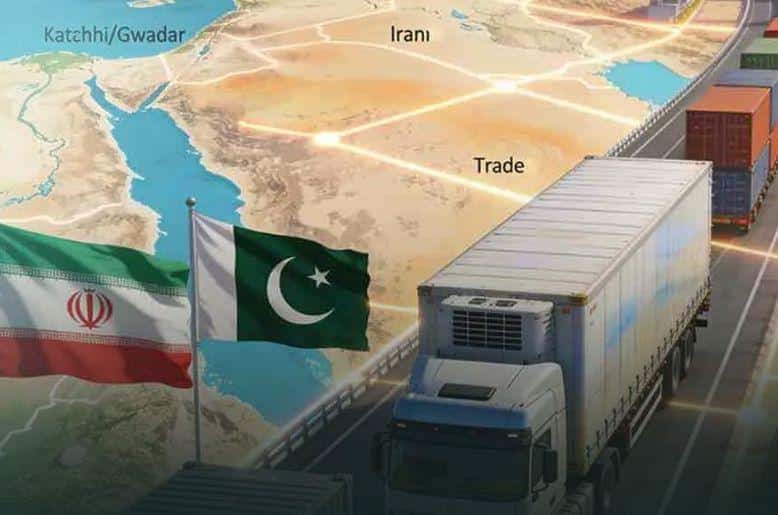
Pakistan has achieved a major milestone in regional trade connectivity by activating the Gabd Border Terminal, strengthening its trade links with Iran and Central Asian states.
The National Logistics Corporation (NLC) has operationalised the Gabd terminal under the Transport International Routier (TIR) system, enabling smoother cross-border cargo movement via road networks.
This development is expected to significantly boost Pakistan’s regional trade through Iran, offering a shorter, safer, and more efficient route to Central Asia compared to the traditional Afghanistan corridor.
Experts say the new Iran route provides a reliable alternative, effectively reducing Pakistan’s dependence on Afghanistan while ensuring faster access to Central Asian markets.
The milestone was marked by the successful handling and clearance of meat consignments transported from Karachi to Tashkent. After customs clearance, the shipment was dispatched to Uzbekistan via Iran under the TIR framework.
The NLC has already been working on activating multiple trade corridors connecting Pakistan with China, Iran, Central Asian states, and other countries. The Gabd Border Terminal itself was constructed in March 2024 to formalise and enhance Pakistan-Iran trade.
Economic experts believe this strategic move will allow Pakistan to expand exports to Central Asia through Iran, following increased connectivity with China. The new route is expected to reduce travel distance, cut logistics costs, improve trade efficiency, and eliminate reliance on the Afghan route.
They further noted that this initiative positions Pakistan as a regional connectivity hub, providing direct access to Central Asian markets.
Located near Gwadar Port, the Gabd-Rimdan corridor is also expected to emerge as a key trade gateway in the future, further strengthening Pakistan’s role in regional commerce.
Karachi is seeing a record rise in maritime activity as global shipping lines divert routes toward Pakistan amid escalating tensions around the Strait of Hormuz.
The situation has positioned Karachi Port as one of the safest and most reliable alternatives for international trade.
Long queues of container vessels and cargo shipments have been reported at Karachi Port, showing a sharp increase in demand. Shipping companies are actively rerouting their vessels to avoid risk routes, leading to congestion but also signalling growing confidence in Pakistan’s maritime security.
The scale of growth is evident in transhipment figures. In 2025, Karachi Port handled around 8,300 TEUs for the entire year. In contrast, the port has already processed approximately 8,860 TEUs within just the past few weeks.
At the same time, Gwadar Port is also emerging as a key regional hub. A special vessel successfully berthed at the port, handling dozens of transhipment cargo units, showing its growing operational capacity.