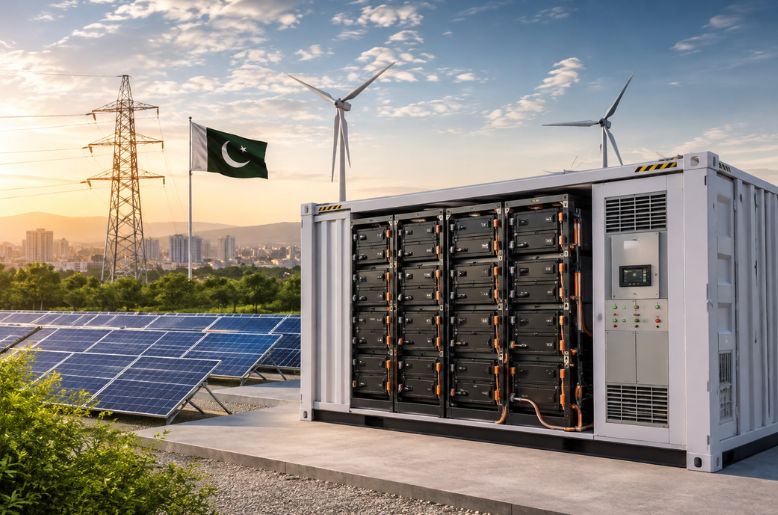
Pakistan has moved beyond the problem of generating enough electricity. The bigger challenge now is making better use of the clean energy it already produces.
Speaking at the Solar Storage Flexibility 2026 Conference in Islamabad on Tuesday, Federal Minister for Energy (Power Division) Sardar Awais Ahmad Khan Leghari said the country now needs to invest in battery storage and a more flexible electricity grid to shift surplus solar power from the daytime to the evening, when demand is at its highest.
“Pakistan does not have a generation problem anymore,” the minister said. “What we have is a flexibility problem. We cannot move the abundant solar energy produced during the day into the evening peak.”
His remarks come as Pakistan rapidly expands renewable energy while also facing uncertainty in global fuel markets.
Leghari said the recent conflict involving Iran and the United States had once again shown how quickly international events can disrupt energy supplies. Rising oil prices, risks to shipping through the Strait of Hormuz and uncertainty in fuel markets directly affect Pakistan, which still depends heavily on imported fuel to run much of its thermal power generation.
He pointed to the disruption in RLNG supplies from Qatar in April as a reminder of the country’s vulnerabilities. While daytime electricity remained available because of widespread solar generation, Pakistan had to return to nighttime load shedding after the gas supply interruption.
According to the minister, battery energy storage is no longer just a technical upgrade. It is becoming an essential tool for protecting Pakistan’s economy from global energy shocks and reducing the impact of fuel price swings on consumers.
Leghari said renewable sources now account for 55% of Pakistan’s electricity mix, with the government aiming to increase the share of clean energy to 90% by 2035.
He explained that battery storage would allow grid operators to absorb more renewable power instead of wasting excess solar generation during the day. Without storage, he warned, Pakistan’s growing solar capacity could become difficult to manage. With it, the country can turn that extra electricity into a valuable national resource.
The minister also said the government wants Pakistan to build, not just buy, battery technology. He revealed that the Ministry of Industries is finalising a policy to encourage local battery manufacturing and assembly through incentives for domestic producers.
To support the transition, Leghari said the government has established a National Steering Committee on Battery Energy Storage Systems, bringing together regulators, power companies and technical experts to develop a coordinated national strategy.
Read next: New policy introduced for solar users