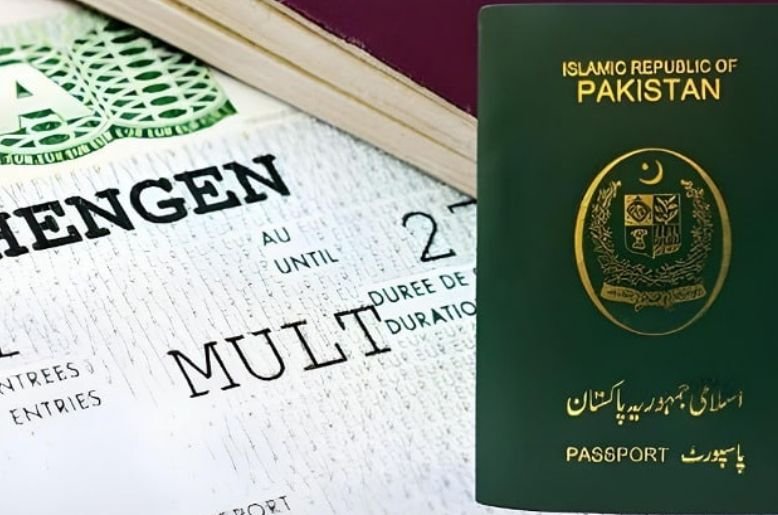
Sri Lanka has officially removed Pakistan from its negative visa list, according to the reports on Tuesday. This move has made it easier for Pakistani citizens to travel to the country.
The decision came after a meeting between Sri Lankan President Anura Kumara Dissanayake and Pakistan’s Federal Interior Minister and the Chairman of the Pakistan Cricket Board (PCB), Mohsin Naqvi.
Naqvi highlighted the difficulties Pakistanis faced in getting visas. On this, President Dissanayake quickly instructed authorities to lift all restrictions.
This has provided major relief to travellers and Pakistani businesses.
The meeting also focused on strengthening cooperation between the two countries. This includes counter-terrorism, anti-narcotics efforts, and joint training programs for security forces.
President Dissanayake confirmed that Sri Lanka’s Prime Minister will soon visit Pakistan, signalling closer diplomatic ties.
The Sri Lankan leader further praised Pakistan for its support during difficult times and acknowledged Islamabad’s decision to host a T20 World Cup match against India in Colombo as a gesture of goodwill.
On his X, formerly Twitter, account, Dissanayake said discussions with Naqvi and Minister for Overseas Pakistanis Chaudhry Salik Hussain reaffirmed the long standing friendship between the two nations.
Met with Pakistan’s Interior Minister Syed Mohsin Raza Naqvi and Minister Chaudhry Salik Hussain today. We reaffirmed our enduring friendship, appreciated Pakistan’s support to Sri Lanka during difficult times. The visiting Pakistan delegation conveyed special thanks from… pic.twitter.com/v2wcIvlzJZ
— Anura Kumara Dissanayake (@anuradisanayake) February 16, 2026
Additionally, Naqvi thanked Sri Lanka for its hospitality during the T20 World Cup and invited the Sri Lankan Prime Minister to visit Pakistan.
Observers further say that removing the visa restrictions is likely to boost travel, tourism, and business between the two countries.
What is a negative visa list?
A negative visa list or a “blacklist” is a record maintained by a government or immigration authority that has the names of individuals, entities, or countries that are restricted, distrusted, or prohibited from obtaining a visa.
Sri Lanka previously had negative visa list rules that made it harder for Pakistani citizens to get a visa. These rules even limited travel rights in some cases, according to the details.
‘Goal was to give Bangladesh due respect’: Mohsin Naqvi
PCB Chairman, while talking to the media previously, said that Bangladesh’s demands were accepted.
He clarified that the decision to not play against India was not personal.
He explained that the move was meant to ensure respect and fair treatment for Bangladesh and to address the concerns they had raised. “Our main goal was to show respect for Bangladesh,” he said.
Earlier, Bangladesh had raised security concerns about playing in the T20 World Cup 2026 in India and requested a change of venue.
But the ICC rejected their request. In protest, Bangladesh withdrew from the tournament.
Instead of negotiating with Bangladesh, the ICC removed them from the event and replaced them with Scotland.
In response, Pakistan called the ICC’s decision a double standard and, in solidarity with Bangladesh, announced it would boycott the match against India, surprising the cricket world.
BCB statement
The Bangladesh Cricket Board (BCB), in a statement, expressed appreciation to Pakistan.
“The BCB wishes to express its profound and heartfelt gratitude to PCB Chairman Mohsin Raza Naqvi, his Board and the cricket fans of Pakistan. Throughout this period, the PCB has demonstrated exemplary sportsmanship and solidarity,” the statement read.
BCB President Aminul Islam said, “We are deeply moved by Pakistan’s efforts to go above and beyond in supporting Bangladesh during this period. Long may our brotherhood flourish.”
“Following my short visit to Pakistan yesterday and given the forthcoming outcomes of our discussions, I request Pakistan to play the ICC T20 World Cup game on 15 February against India for the benefit of the entire cricket ecosystem.”
Read more: ‘Make this make sense!’: Gillespie questions ICC replacing Bangladesh in T20 World Cup