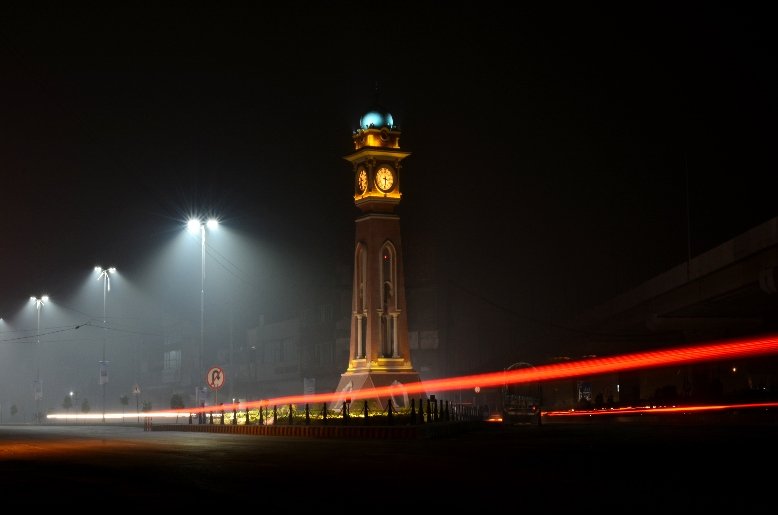
Pakistan is witnessing the longest night of the year, also known as the winter solstice, on December 21 (Saturday).
This event results in reduced daylight hours and extended nighttime across the hemisphere, including Pakistan.
Space and Upper Atmosphere Research Commission (SUPARCO) explained that the solstice highlights Earth’s orbital movement and tilt, which play a significant role in seasonal changes.
In June, the Northern Hemisphere is tilted towards the Sun. While in December, the Northern Hemisphere is tilted away from the Sun.
The winter solstice itself showcases the precise turning point in this cycle. This marks the astronomical “peak” of winter’s darkness for the north, the farthest point in our orbit where the hemisphere receives the least direct sunlight, resulting in the year’s shortest day.
December’s solstice is when the sun reaches its southernmost position in the sky, directly above the Tropic of Capricorn. For people in the Northern Hemisphere, this means it’s the shortest day of the year, with the fewest hours of daylight, and the beginning of astronomical winter. However, it also signals a gradual return of light.
The date of the winter solstice can vary slightly from year to year.
This is because Earth takes around 365.24 days (give or take a few decimal places) to complete an orbit around the Sun, so not an exact year.
It means the timing of the solstice slips by about six hours each year, which adds up to a full day over four years.