
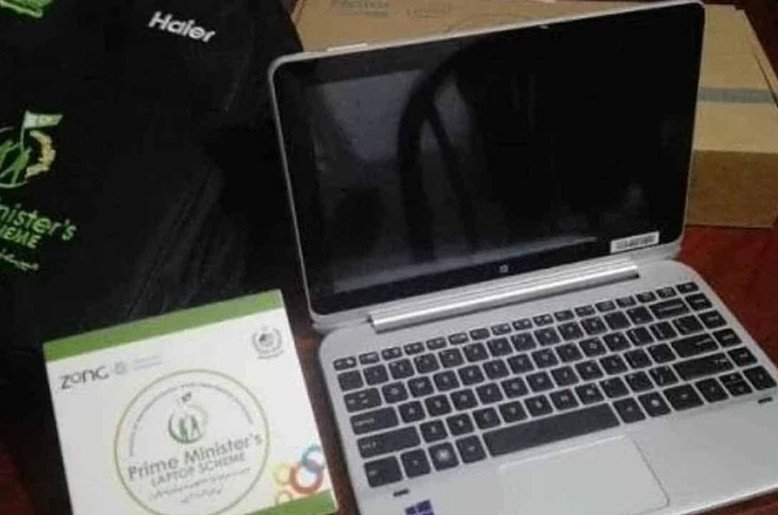
The term PML laptop often confuses people living outside Pakistan. Many assume it refers to a laptop brand or a global tech product. In reality, the phrase points to a major government education program in Pakistan known as the Prime Minister’s Laptop Scheme, often shortened as PML laptop Scheme.
This program has played an important role in helping college and university students gain access to technology. For students who are curious about global education programs, this scheme offers a unique example of how a developing country tries to close the digital gap for young learners.
In this article, we explore the history, goals, eligibility rules, and impact of the PML laptop Scheme. We also explain how the program fits into Pakistan’s broader youth-development strategy and why it continues to attract attention around the world.
What Is the PML Laptop Scheme?
The PML laptop Scheme is a government-funded initiative in Pakistan that provides free laptops to university students. It is part of the country’s Prime Minister’s Youth Program (PMYP) and is managed by the Higher Education Commission (HEC), which oversees universities across Pakistan.
The word “PML” is often associated with the political party Pakistan Muslim League-Nawaz, also called PML-N, because this party first introduced the scheme during its time in office. However, the program itself is officially known as the Prime Minister’s Laptop Scheme (PMLS).
Why the PML Laptop Scheme Was Created
Pakistan has a young population, more than 60% of the country is under 30. But many students lack access to computers and high-speed internet, especially in rural areas.
The government introduced the PML laptop Scheme to address several challenges:
1. Improve Digital Literacy
Many students did not have personal computers. The scheme aimed to help them learn digital skills required for modern jobs.
2. Support Online Learning
With universities increasingly adopting online platforms, access to a laptop became essential for academic work, research, and communication.
3. Promote Merit and Motivation
Laptops were awarded to students based on academic performance, encouraging them to achieve better grades.
4. Reduce the Digital Divide
The scheme helped bridge the technology gap between students from wealthy and low-income backgrounds.
These goals made the PML laptop Scheme one of the most well-known public education initiatives in Pakistan.
How the Scheme Works
The PML laptop scheme follows a clear set of rules and processes. Here’s a simple explanation for readers in the United States:
Eligibility Criteria
Students must be enrolled in a public-sector university recognized by the HEC. The qualifying programs usually include:
- PhD
- MS/MPhil
- 4-year or 5-year undergraduate degrees
Students in private universities typically do not qualify. Merit lists are created based on academic records, and only top-performing students receive laptops.
Application Process
The process is entirely online. Students must register through the official portal:
laptop.pmyp.gov.pk
They provide their academic details, university information, and identification documents. The HEC verifies all applications before creating the final list of selected candidates.
Laptop Models and Features
There is no specific “PML laptop” brand. Over the years, different companies have provided devices through competitive tenders. In some phases, laptops were manufactured by Haier, while in others the suppliers changed.
The specifications usually include:
- Mid-range processors (Intel)
- 4–8GB RAM
- Pre-installed software for education
- Built-in security features
- Long battery life
These specifications are designed for students who need laptops for research, assignments, and online classes, not necessarily high-end gaming or heavy content creation.
Current Status of the PML Laptop Scheme
The scheme had multiple phases since its launch. After being paused for a few years, it was revived again in late 2024 and early 2025. New registration drives and laptop distributions were reported during those periods.
The frequent relaunches show how important the program remains for Pakistan’s youth and education system. While political leadership changes, the demand for the PML laptop Scheme continues.
Impact of the PML Laptop Program
The PML laptop initiative has made a lasting difference in Pakistan’s education landscape. Here are a few notable outcomes:
1. Millions of Students Benefited
Over several phases, hundreds of thousands of students received laptops, making it one of the largest youth-technology programs in South Asia.
2. Rise in Digital Skills
Students learned coding, data analysis, digital marketing, and other technology skills that improved employability.
3. Growth of Online Education
During global events like COVID-19, laptop access proved essential for remote learning. Students with PML laptops were better prepared.
4. Encouragement of Research Culture
University students turned to data-related projects, research work, and academic writing with greater ease.
5. Reduced the Technology Gap
Students from low-income families gained tools they otherwise could not afford.
This program offers an interesting view of how other countries support education through technology distribution rather than subsidies or loans.
Why the Term “PML Laptop” Gets So Much Attention Online
People continue to search for PML laptop for several reasons:
- Ongoing news about new phases
- Confusion about eligibility rules
- Curiosity from overseas Pakistanis living in the U.S.
- Interest from global audiences studying public-policy models
The term also appears in political discussions, especially around elections, because the scheme is associated with a specific political party. However, the initiative itself remains a formal government program regardless of which party is in power.
Is the PML Laptop Scheme Effective?
While the program has helped many students, opinions differ about its long-term value. Some believe it is a strong investment in human capital. Others argue that funds should be spent on improving internet access or university infrastructure.
However, one fact stands out: the PML laptop Scheme brought technology into the hands of students who needed it most. In a developing country, that alone makes the program significant.
For audiences, this provides an example of a government choosing direct distribution of devices as a way to support education.
Final Thoughts
The PML laptop program is more than a free-gadget giveaway. It represents Pakistan’s effort to build a digitally capable generation through merit-based support. The scheme continues to evolve, and with new phases being announced, students remain eager to participate.
Whether you are a student, a researcher, or simply someone curious about global education strategies, the PML laptop Scheme offers valuable insight into how technology access can transform learning.
FAQs
Q. What is the PML laptop Scheme?
The PML laptop Scheme is a government initiative under Pakistan’s Prime Minister’s Youth Program (PMYP). It provides free laptops to eligible university students to improve digital learning and academic performance.
Q. Who is eligible to apply for the PML laptop?
Eligibility includes full-time students enrolled in HEC-recognized public universities, typically in PhD, MS/MPhil, and 4–5-year undergraduate programs. Selection is merit-based and verified by the Higher Education Commission.
Q. How do students apply for the PML laptop Scheme?
Students apply online through the official PMYP portal at laptop.pmyp.gov.pk. They must submit academic details, personal information, and required documents for HEC verification before final selection.
Q. What laptops are given in the PML laptop Scheme?
Laptop models vary by tender and may include brands like Haier in certain phases. Specifications differ each year but generally include mid-range processors, adequate RAM, and pre-installed educational software.


