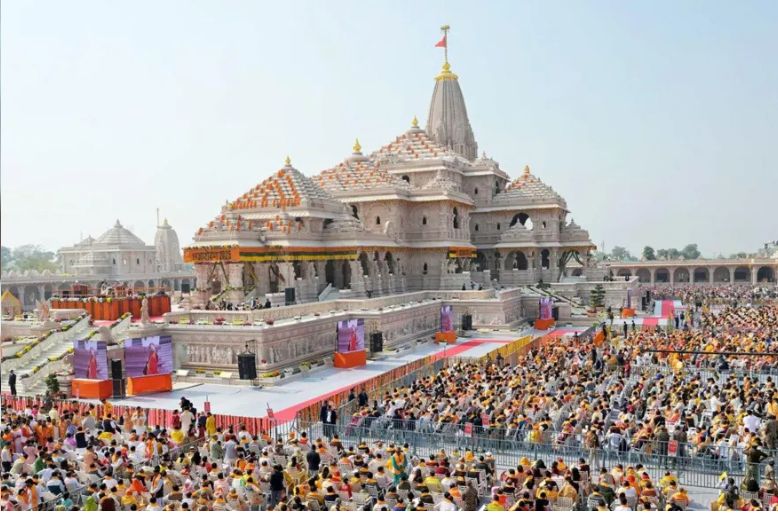
A controversy has erupted in India over the misuse of donations collected at the Ram Temple in Ayodhya, with opposition parties demanding accountability from the government of Prime Minister Narendra Modi.
The dispute comes nearly two-and-a-half years after Modi inaugurated the temple, built on the site where the historic Babri Mosque stood before it was demolished by Hindu mobs in 1992. The demolition triggered widespread communal violence that claimed nearly 2,000 lives.
Since its opening in January 2024, the temple has emerged as one of India’s biggest pilgrimage centres, attracting millions of devotees every year and receiving huge amounts of cash, gold, silver and jewellery as offerings.
The allegations centre around the management of these donations. Critics have questioned the transparency of the funds collected at the shrine, while petitions have been filed in India’s Supreme Court seeking a court-supervised investigation by federal authorities.
The Shri Ram Janmabhoomi Teerth Kshetra Trust, which manages the temple, has rejected allegations of financial wrongdoing. However, the Uttar Pradesh government has formed a Special Investigation Team (SIT) to probe the claims.
Following an interim SIT report, Ayodhya police registered a case of alleged embezzlement against eight individuals. A former lawmaker has claimed that donations worth more than 70 million Indian rupees may have gone missing.
The temple receives offerings through dozens of donation boxes placed across the complex. The trust reportedly recorded income of around 3.27 billion Indian rupees during the 2024-25 financial year, placing it among India’s richest religious institutions.
The controversy has created fresh political pressure on Modi and his Bharatiya Janata Party (BJP), which had made the construction of the temple a major electoral promise.
Opposition parties argue that the government must answer questions over the alleged financial irregularities linked to a project that became a key symbol of Modi’s political campaign.