
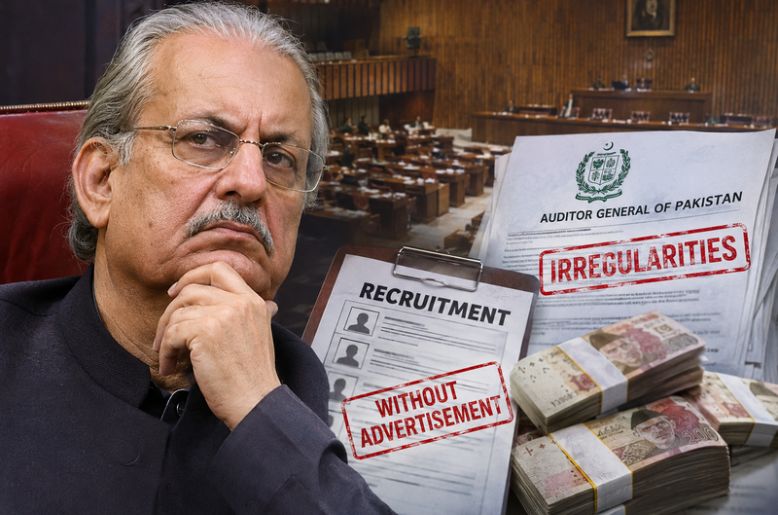
The audit reports of the Auditor General of Pakistan (AGP) have raised serious questions about the administrative and financial affairs of the Senate Secretariat during the tenure of Pakistan Peoples Party (PPP) leader and former Senate chairman Mian Raza Rabbani, who has frequently delivered lectures on parliamentary dignity, merit, transparency and the supremacy of the Constitution and law.
According to official audit documents, during Rabbani’s tenure as custodian of the Upper House, allegedly illegal recruitments were made without public advertisements, disregarding established rules, regulations and merit. Serious financial irregularities involving hundreds of thousands of rupees in government procurement and advance payments were also documented.
Audit reports compiled by the Auditor General of Pakistan and documents presented before the Public Accounts Committee (PAC) indicate that transparency principles, required academic and professional qualifications, and quota regulations were allegedly disregarded during appointments to various positions within the Senate Secretariat.
Audit authorities pointed out that direct appointments to several important positions were made without public advertisements and in violation of prescribed recruitment procedures. Critics argue that these appointments undermined merit and deprived qualified and deserving young people of employment opportunities.
Furthermore, the audit reports highlighted financial mismanagement and violations of audit regulations within the Senate Secretariat.
According to the documents, advance payments issued for official expenditures were not adjusted within the stipulated period. Public Procurement Regulatory Authority (PPRA) rules were also allegedly disregarded during the procurement of various goods and services, with favoured firms reportedly receiving preferential treatment.
Audit authorities raised serious objections over these financial irregularities involving hundreds of thousands of rupees.
Political observers, legal experts and critics have described the audit findings as evidence of an apparent contradiction between Raza Rabbani’s public statements and his administrative record.
Critics have questioned the moral grounds on which Rabbani lectures others about constitutional supremacy, the rule of law and parliamentary traditions when, during his own tenure as Senate chairman, he allegedly failed to prevent irregular recruitments, unadvertised appointments and financial mismanagement within the Upper House’s secretariat.
Analysts critical of Rabbani have also questioned his opposition to holding a referendum, alleging that his stance is aimed at protecting the PPP’s political dominance in Sindh. They argue that his own administrative and financial record as Senate chairman contains numerous audit objections and allegations of illegal appointments.
Calls have also been made for strict accountability of all those responsible for the alleged illegal appointments and financial irregularities identified in the Auditor General’s reports.
Critics maintain that a thorough investigation into these audit findings is necessary to establish responsibility and allow the public to assess whether those advocating constitutional supremacy, transparency and merit have upheld these principles during their own tenures in office.