
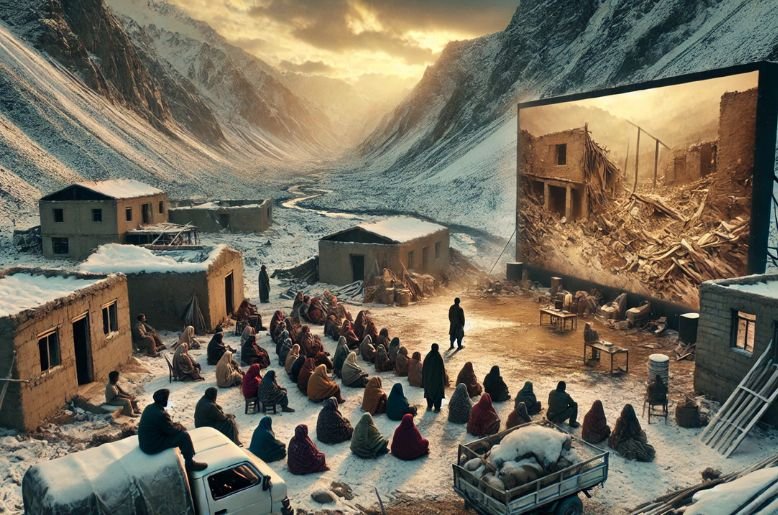
At 08:50 Pakistan Standard Time on October 8, 2005, a magnitude 7.6 earthquake struck near Muzaffarabad with extreme intensity, killing more than 73,000 people in Pakistan and leaving millions without shelter.
A powerful quake strikes a vulnerable region
The epicentre of one of the devastating earthquakes ever hit Pakistan lay about 19 kilometres north east of Muzaffarabad and about 90 kilometres north north east of Islamabad.
Strong shaking hit Balakot, wide areas of Azad Jammu and Kashmir, and parts of Khyber Pakhtunkhwa, while tremors were also felt in India, Afghanistan, Tajikistan and China’s Xinjiang region.
The region sits where the Indian plate pushes under the Eurasian plate, so the ground is under constant pressure.
Because valleys are surrounded by steep mountains and towns sit on soft soils, the same energy that moves the Himalayas upward also makes this area highly prone to damaging earthquakes.
Landslides and aftershocks deepen the crisis
The main shock tore a surface rupture about 75 kilometres long, one of the highest at time. Thousands of landslides crashed down slopes, blocking roads, cutting villages off, and reshaping rivers.
Major slides near Chella Bandi and in the Pir Panjal Range even created a new lake.
The Neelum River changed course in places, and a new waterfall formed along the Kunhar valley.
Aftershocks continued for weeks, with many above magnitude four and several above magnitude five, keeping families outdoors even in the capital and slowing rescue work.
Mountain faces near the epicentre rose by metres, a visible sign that the Himalayas are still growing and that this event was part of that ongoing collision.
Schools collapse and families lose homes
Meanwhile, the timing of earthquake proved devastating.
Many children were in class when buildings failed, and about nineteen thousand students died as schools collapsed.
Across the region, hospitals, clinics, bridges and water systems were damaged or destroyed.
Nearly three and a half million people lost shelter and about one hundred thirty eight thousand were injured.
In Balakot, most buildings were reduced to rubble, and in Muzaffarabad almost every structure suffered damage.
Power and phones failed in many areas, which slowed calls for help and made coordination harder just as winter approached.
Local courage and global aid drive the response
Local neighbours were the first responders, pulling survivors from debris and sharing food and shelter.
The Pakistan Army, medical corps, engineers and pilots reached remote valleys with helicopters and ground vehicles.
Aid arrived from across Pakistan and from many countries, along with United Nations agencies and international charities that set up clinics, temporary schools and camps.
Even so, steep terrain, broken roads and cold weather created delays and new health risks.
In the years since, the lesson is clear. Safer school designs, strict building codes, open escape routes and regular drills can save lives when the ground shakes again.


