
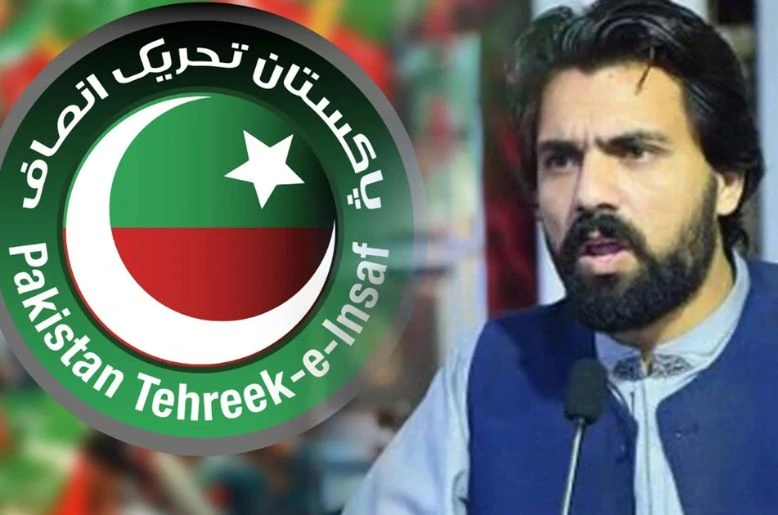
A claim made on social media by senior Pakistan Tehreek-e-Insaf (PTI) leader Shahid Khattak regarding road blockades and obstructions in Lahore has been exposed as false propaganda, with social media users and analysts raising several serious questions about his narrative.
In a video that went viral on social media, Shahid Khattak can be seen claiming that he wanted to visit the residence of Khyber Pakhtunkhwa Chief Minister Suhail Afridi and other PTI leader Hassam Niazi in Lahore Cantonment, but was prevented from doing so by the Punjab government. In the video, he alleges that all routes leading towards Lahore Cantonment were blocked and that even an elected chief minister of a province was not being allowed to meet his party workers.
However, after the video surfaced on social media, users pointed out multiple contradictions. Questions are being raised about the fact that at the location where Shahid Khattak is standing and claiming road closures, no barriers or checkpoints are visible anywhere nearby, casting serious doubt on his stance.
Moreover, users recalled that just ten days earlier, Shahid Khattak had claimed that his leg was broken outside Adiala Jail and had shared pictures and videos on social media showing his leg in a plaster cast. Now, within the same ten-day period, questions are being raised about how his leg suddenly healed and how he was able to participate fully and in good health in PTI protests in Lahore.
On the other hand, the Punjab government maintains that Section 144 is in force across the province due to security concerns. According to government sources, these measures have been taken in view of potential terrorist threats and the law and order situation, while some PTI workers have previously been found involved in provocative activities.
Social media users say that the contradictions found in Shahid Khattak’s viral video and his previous claims have weakened PTI’s narrative and once again sparked debate over the credibility of claims made on social media. Such statements not only create confusion among the public but also damage political credibility.


